
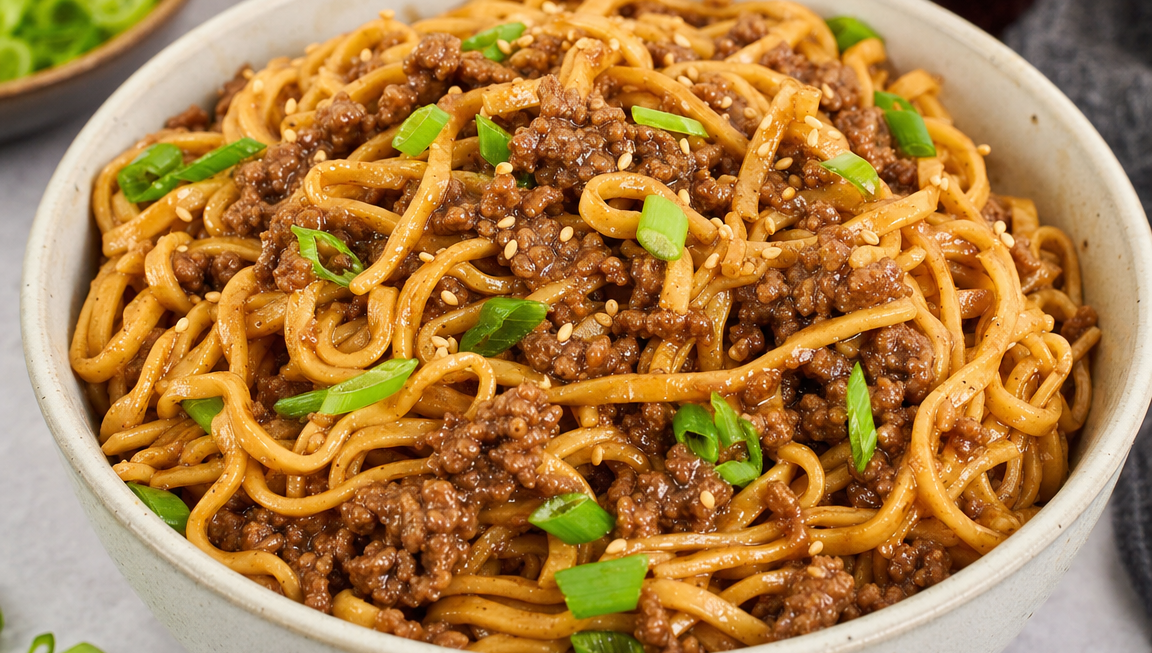
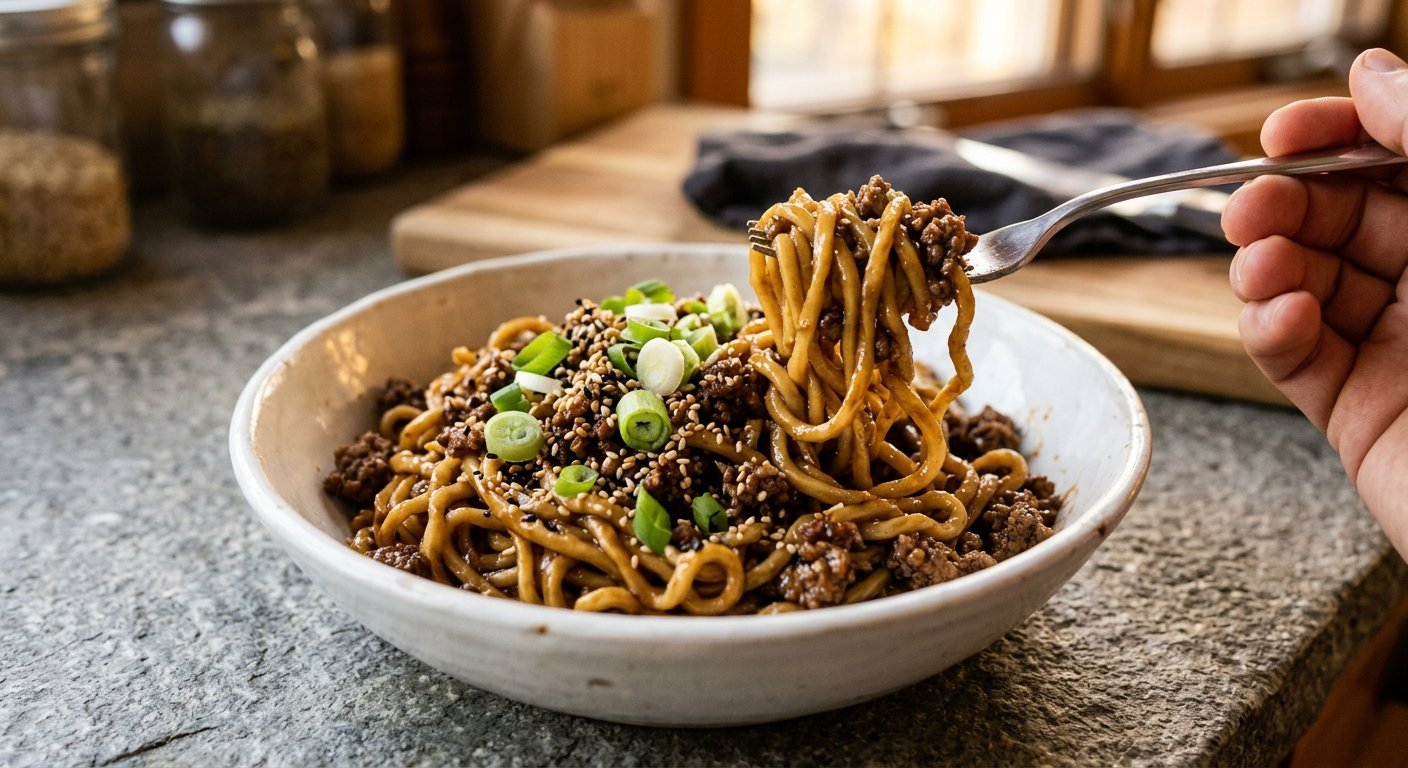
Try these Mongolian ground beef noodles when you want that sticky, sweet-savoury restaurant sauce without slicing a single steak. Ground beef browns in five minutes, the sauce comes together in one pan, and dinner is on the table in 20. It’s a cheap, high-flavour weeknight meal that tastes far more expensive than it is. Here’s exactly how I make it.
What Sets This Recipe Apart 🌟
- Ground beef, not steak: A fraction of the cost and no slicing technique required.
- 20 minutes, one skillet: The sauce builds in the same pan as the beef.
- That sticky glaze: Brown sugar and soy reduce into a proper coating, not a watery sauce.
- Pantry ingredients: Nothing here needs a special trip.
Budget-Friendly Comfort 💰
A pound of ground beef stretches to four full portions here because the noodles and sauce carry so much of the dish. It’s one of the cheapest ways to get this flavour profile on the table.
Ready in 20 Minutes ⏱️
Boil the noodles while the beef browns and the two finish at the same moment. There’s no waiting stage anywhere in the method.
Ingredients List 🛒
Use 85/15 ground beef rather than very lean. You need some rendered fat to carry the garlic and ginger, and 93/7 gives a noticeably drier result. If you only have lean beef, add a teaspoon of neutral oil to the pan.
- 1 pound (454g) ground beef, 85/15
- 12 ounces (340g) lo mein or thick wheat noodles
- 5 cloves garlic, minced
- 1 tablespoon fresh ginger, grated
- 1/2 cup low-sodium soy sauce
- 1/2 cup light brown sugar, packed
- 1/4 cup beef broth
- 2 tablespoons hoisin sauce
- 1 tablespoon rice vinegar
- 2 teaspoons toasted sesame oil
- 1/2 teaspoon red pepper flakes (optional)
- 1 tablespoon cornstarch whisked into 2 tablespoons cold water
- 4 scallions, sliced, whites and greens separated
- Toasted sesame seeds, to finish
How to Make It 🔧
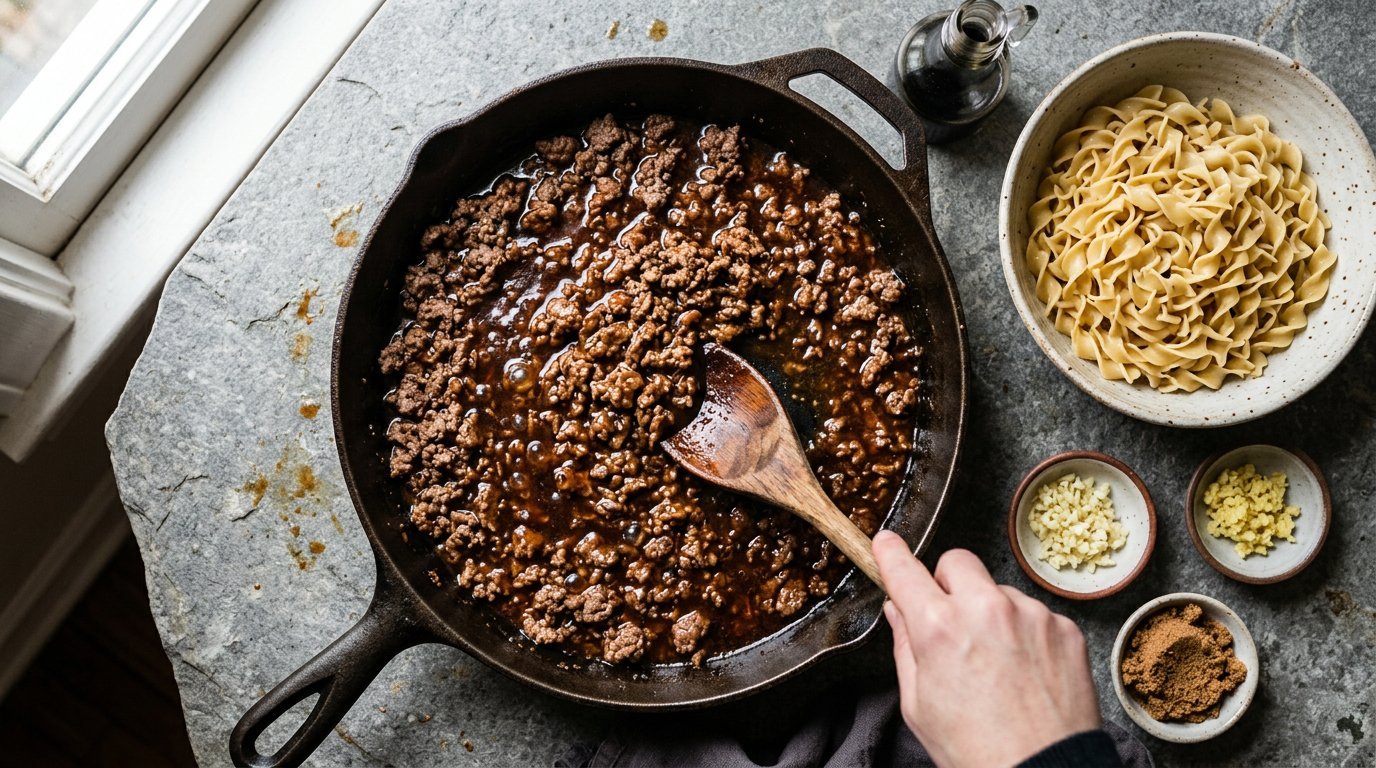
Start the pasta water before anything else — it’s the only part of this that takes real time.
- Boil the noodles. Cook to just under al dente, about a minute short of the package time, then reserve 1 cup of the cooking water before draining. Don’t rinse them — the surface starch helps the sauce grip.
- Brown the beef properly. Heat a large skillet over medium-high and add the beef, breaking it up but then leaving it undisturbed for 3-4 minutes so it develops a genuine brown crust on one side. Stirring constantly from the start steams the meat grey and you lose most of the flavour. Cook 7-8 minutes total to 160°F, the USDA safe temperature for ground beef.
- Drain the excess fat. Tip off all but about a tablespoon. Too much fat and the sauce won’t cling; none at all and it tastes thin.
- Bloom the aromatics. Add the garlic, ginger, scallion whites and red pepper flakes to the pan and stir 45 seconds until fragrant. Keep them moving — garlic burns fast in a hot pan and turns acrid.
- Build the sauce. Pour in the soy sauce, brown sugar, beef broth, hoisin, rice vinegar and sesame oil. Scrape the browned bits off the bottom as it comes to a simmer; that fond is a significant part of the flavour. Simmer 3 minutes to let it reduce slightly.
- Thicken it. Re-stir the cornstarch slurry and pour it in while stirring. Cook about a minute until the sauce visibly thickens and turns glossy enough to coat the back of a spoon.
- Combine and loosen. Add the drained noodles and toss for 2 minutes until every strand is coated. The sauce will look tight — add reserved noodle water a few tablespoons at a time until it’s silky rather than sticky.
- Finish. Off the heat, scatter with scallion greens and sesame seeds and serve straight away.
Making It Perfect 💯
Resist stirring the beef for the first few minutes. That undisturbed contact with hot metal is where the browning happens, and browning is most of what makes ground beef taste like anything (this is the same reason a burger tastes better than a boiled meatball).
Keep the reserved noodle water no matter what. Sauces built on sugar and soy tighten aggressively as they cool, and that starchy water is the only thing that loosens them back to a glaze without diluting the flavour.
Use fresh ginger rather than ground. The dried version tastes dusty and flat in a sauce this simple, and there’s nowhere for it to hide. A microplane makes grating it about ten seconds of work.
Separate your scallion whites from the greens. The whites are firmer and benefit from cooking with the aromatics; the greens are delicate and should go on raw at the end for colour and freshness.
Taste before the noodles go in. Once the pasta is in the pan it’s difficult to adjust seasoning evenly — check the sauce for salt and sweetness while it’s still on its own.
When Things Go Wrong 🤔
The sauce is too sweet: Brown sugar quantities vary with how tightly you pack the cup. Add rice vinegar half a teaspoon at a time — acid corrects sweetness faster than salt does.
The noodles clumped together: They sat too long after draining. Toss them into the sauce within a minute or two, or add a teaspoon of oil while they wait.
The beef is greasy: You didn’t drain enough fat after browning. 85/15 releases a fair amount, and leaving it all in prevents the sauce from adhering to the noodles.
The sauce won’t thicken: The slurry settled, or the pan wasn’t simmering when it went in. Cornstarch needs sustained heat — bring it back to a proper bubble.
Freshness Guide 📅
Refrigerate within 2 hours in an airtight container and eat within 3-4 days, following USDA guidance for cooked ground beef. The noodles keep absorbing sauce, so leftovers are drier — reheat in a skillet with a splash of water or broth and they come back well. Discard if you notice a sour smell or any sliminess on the noodles.
This freezes better than most noodle dishes because the sauce is substantial. Freeze in portions for up to 3 months, thaw overnight in the fridge, and reheat in a pan with a little broth. The texture is about 80% of fresh, which is acceptable for a make-ahead lunch.
Mix It Up 🎲
Ground turkey or chicken both work, though they’re leaner — add a tablespoon of oil and expect a slightly lighter flavour. Ground pork is excellent and needs no changes at all.
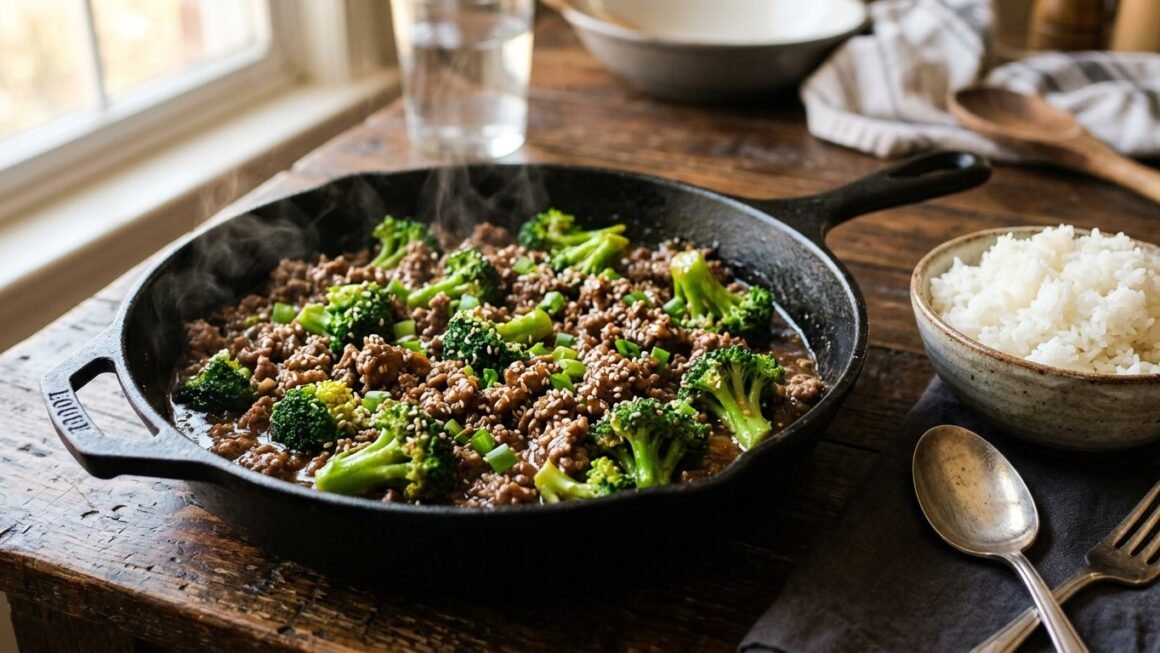
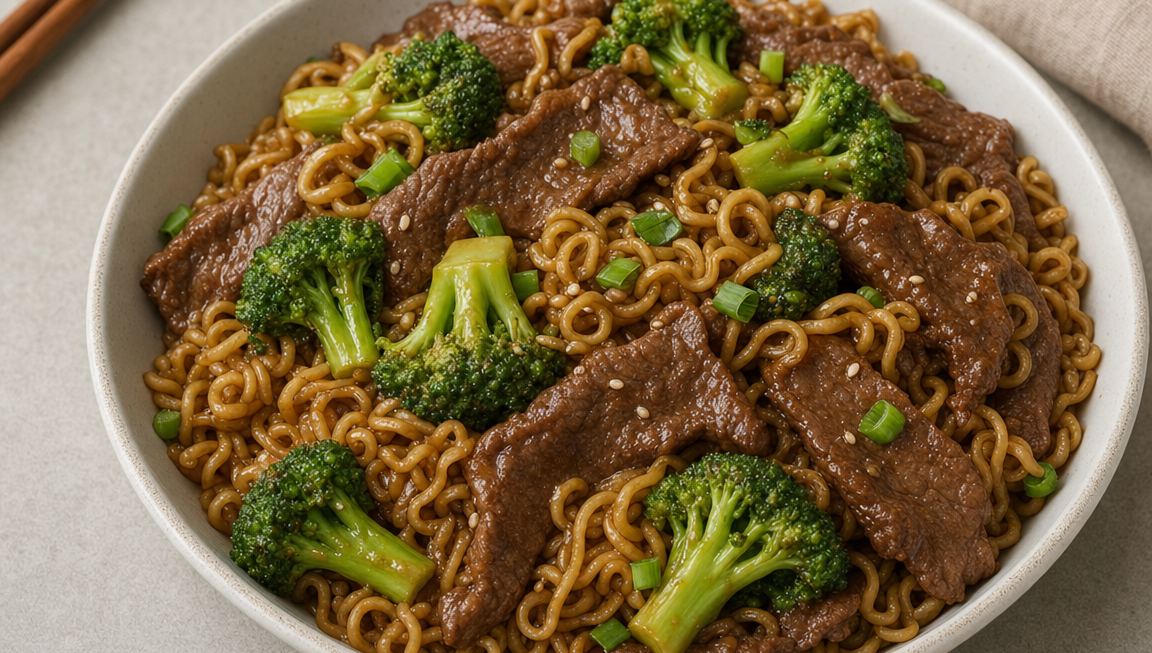
Bulk it out with vegetables: shredded carrot, sliced bell pepper, snap peas or a bag of coleslaw mix stirred in with the sauce all work and stretch the beef further. For the classic pairing, see ground beef and broccoli. Broccoli is a natural fit if you like the combination in beef and broccoli ramen stir fry.
For more heat, add a tablespoon of chili garlic sauce or sriracha to the sauce base. A teaspoon of five-spice powder takes it in a warmer, more aromatic direction.
Serve it over rice instead of noodles if that’s what you have, or over cauliflower rice for a lower-carb version. Reduce the sauce slightly longer in that case, since rice absorbs less than pasta.
Perfect Pairings 🤝
Something crisp and acidic is what this needs alongside it. A quick cucumber salad dressed with rice vinegar and a pinch of sugar takes three minutes and balances all that sweet soy. Steamed or roasted broccoli works equally well if you want it warm.
For a bigger table, serve with creamy pasta salad for a casual mixed spread. To drink, a cold light beer or iced green tea both cut the richness cleanly.
Quick Answers ⚡
What noodles work best?
Thick wheat noodles like lo mein or udon hold the heavy sauce best. Spaghetti or linguine are perfectly fine substitutes, and instant ramen with the seasoning discarded works too.
Can I reduce the sugar?
Down to 1/3 cup without much loss. Below that the sauce stops reducing into a proper glaze, since the sugar is doing structural work as well as adding sweetness.
Is this the same as classic Mongolian beef?
It uses the same sauce profile — soy, brown sugar, garlic and ginger — but swaps sliced flank steak for ground beef and serves it over noodles. Faster and cheaper, with very similar flavour.
How do I make it less salty?
Use low-sodium soy sauce, which is what the recipe specifies, and swap the beef broth for water. You can also cut the soy to 1/3 cup and make up the volume with broth.
Can I double it?
Yes, though brown the beef in two batches so it sears rather than steams. The sauce doubles without any adjustment.
Nutrition Facts 📊
Per serving, based on 4 servings. These figures are (estimated — verify before publishing) and were not calculated against a live USDA database.
- Calories: 720 (estimated)
- Protein: 33g
- Carbohydrates: 86g
- Dietary Fiber: 3g
- Total Sugars: 30g
- Total Fat: 27g
- Saturated Fat: 9g
- Sodium: 1,520mg
- Cholesterol: 80mg
Macro Breakdown: Protein 18% / Carbs 48% / Fat 34% of calories.
Diet Tags: Dairy-free, nut-free.
Allergens: Contains wheat (noodles, soy sauce, hoisin), soybeans, sesame.
Nutrition Notes: The sugar figure includes the half cup of brown sugar in the sauce, which is what creates the glaze. Cutting it to 1/3 cup reduces sugars to roughly 20g per serving. Adding two cups of vegetables increases fibre and lowers calories per portion by spreading the sauce further.
The Bottom Line 🎯
This is the recipe I reach for when there’s nothing planned and no energy to plan. Ground beef, pantry sauce ingredients and whatever noodles are in the cupboard produce something that genuinely satisfies, and the whole thing is done before a delivery order would arrive. Brown the beef properly and keep the noodle water, and it works every time.
Nutrition is an estimate and varies by brand and portion.