

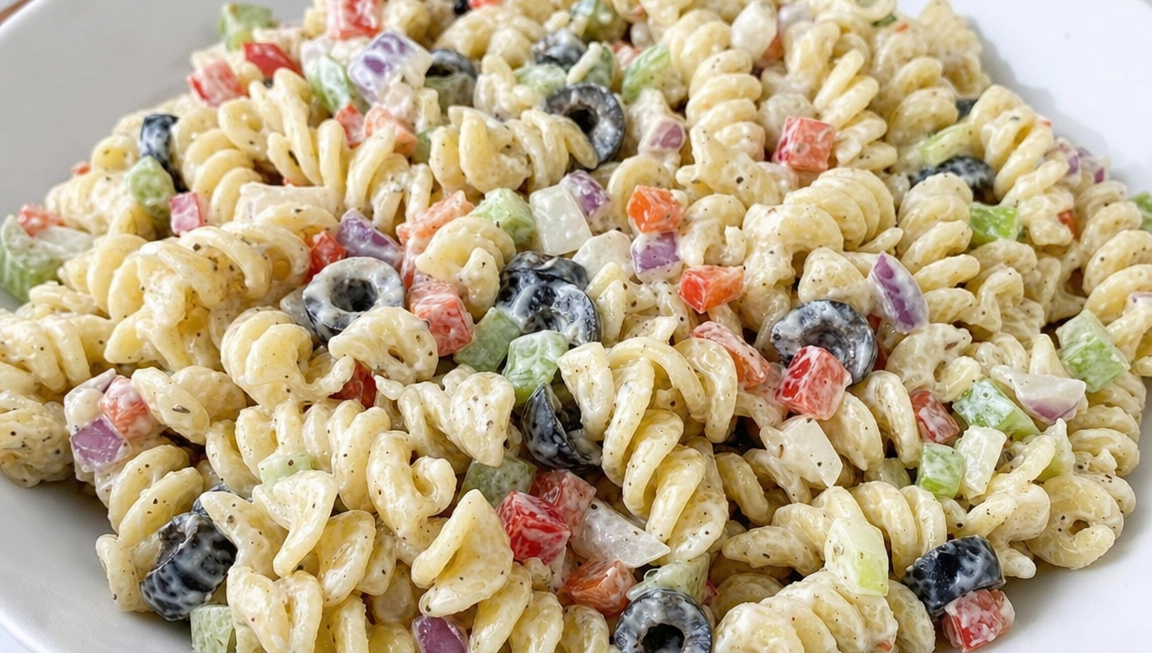
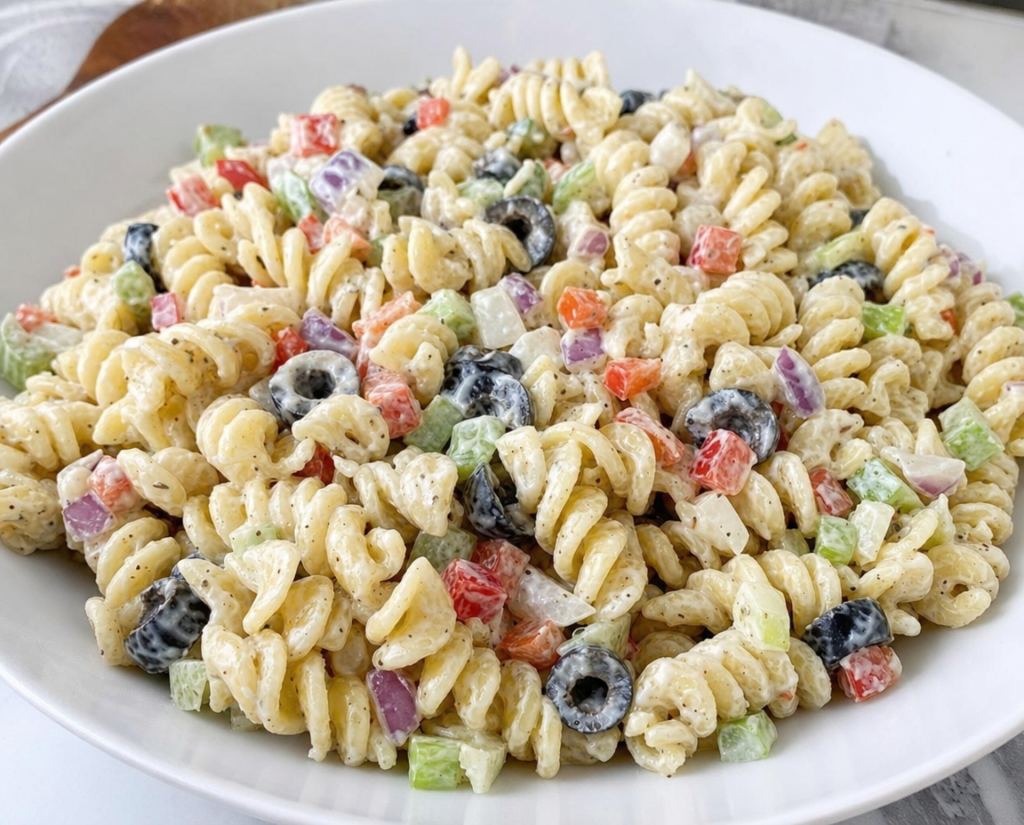
Try this creamy pasta salad the next time you need a side dish that actually holds up — it’s the easy, make-ahead bowl that stays creamy for days instead of drying into a clumpy mess by dinnertime. The trick is a two-stage dressing method, and it takes about ninety extra seconds. Here’s exactly how I make it.
Why You’ll Love This Recipe ❤️
- It stays creamy: Dressing the pasta twice means it’s still glossy on day three, not pasty.
- Genuinely make-ahead: Built to be assembled in advance — the flavor actually improves overnight.
- Feeds a crowd: Twelve side servings from one bowl, and it scales up cleanly.
- No cooking beyond boiling water: If you can drain pasta, you can make this.
Perfect Balance of Tangy and Rich 🌶️
Mayonnaise alone tastes heavy and flat. Sour cream lightens the body while red wine vinegar and a spoonful of pepperoncini brine cut straight through the richness. You get creamy without the sandwich-spread effect that ruins most versions.
Minimal Effort, Maximum Impact ⚡
Boil, chop, toss, chill. The whole thing is about twenty minutes of hands-on work, and every bit of it can happen the day before you need it.
What You’ll Need 🛒
One note before you shop: use full-fat mayonnaise and block-style sour cream. Light versions contain more water and stabilizers, and they split into a thin, grainy mess once the salad chills (this is the single most common reason a creamy pasta salad fails).
- 1 pound (454g) short pasta — rotini, farfalle, or medium shells
- 1 cup cherry tomatoes, halved
- 1 cup English cucumber, quartered and sliced
- 1/2 cup red onion, finely diced
- 1 cup (113g) sharp cheddar, cut into small cubes
- 3/4 cup black olives, sliced
- 1/2 cup pepperoncini, chopped, plus 1 tablespoon of the brine
- 1/3 cup fresh parsley, chopped
- 1 1/4 cups full-fat mayonnaise
- 1/2 cup sour cream
- 2 tablespoons red wine vinegar
- 1 tablespoon Dijon mustard
- 2 teaspoons granulated sugar
- 1 teaspoon garlic powder
- 1 teaspoon dried Italian seasoning
- 3/4 teaspoon kosher salt, plus more for the pasta water
- 1/2 teaspoon black pepper
Step-by-Step Instructions 👩🍳
Read step four before you start — the two-stage dressing is the whole point, and it’s easy to skip past.
- Boil the pasta hard and salt it heavily. Use about 1 tablespoon of kosher salt per 4 quarts of water. Cook to one full minute past the package’s al dente time. This matters more than it sounds: pasta firms up considerably as it chills, so a noodle that’s perfect hot will be unpleasantly tough straight from the fridge.
- Drain and rinse under cold water. This is the one time rinsing pasta is correct. Run cold water over it, tossing with your hands, until it’s cool to the touch. Rinsing washes off the surface starch that would otherwise turn your dressing gluey and thick. Shake the colander well — standing water thins the dressing.
- Whisk the dressing. Combine the mayonnaise, sour cream, vinegar, Dijon, sugar, garlic powder, Italian seasoning, salt, and pepper until completely smooth. Taste it now. It should read slightly too salty and too tangy on its own — the pasta and vegetables will mute it considerably once combined.
- Split the dressing and apply the first coat. Set aside one-third in the fridge. Toss the remaining two-thirds through the drained pasta until every piece is coated, then cover and refrigerate at least 2 hours or overnight. The pasta will absorb this coat and look drier than you’d like (that’s exactly what’s supposed to happen — it’s seasoning the noodles from the inside).
- Add the vegetables and the second coat. Within 30 minutes of serving, fold in the tomatoes, cucumber, red onion, cheddar, olives, pepperoncini, and parsley. Pour over the reserved dressing plus the tablespoon of pepperoncini brine and fold gently.
- Season one final time. Taste and adjust the salt right before it goes on the table. Cold food needs noticeably more seasoning than warm food, and this is the step most people skip.
Pro Tips for Success 💡
Salt the pasta water like you mean it. This is the only opportunity you get to season the noodles themselves, and no amount of dressing at the end will fix bland pasta underneath. A tablespoon per four quarts is the right ballpark.
Pat your cucumber and tomatoes dry with a paper towel before they go in. Both release water as they sit, and that water is what turns a creamy pasta salad soupy by hour two. Thirty seconds with a paper towel genuinely changes the texture on day two.
Cube the cheese rather than shredding it. Shredded cheddar disappears into the dressing and clumps into a paste; small cubes stay distinct and give you an actual bite of sharp cheese (this is a small change that makes the salad taste far more deliberate).
If raw red onion is too aggressive for your table, soak the diced onion in cold water for ten minutes and drain it well. This pulls out the harsh sulfur compounds while keeping the crunch and color.
Choose a pasta shape with texture. Rotini’s spirals physically trap dressing, which is why it’s the standard here. Farfalle and medium shells work nearly as well. Smooth shapes shed dressing, and small shapes like orzo turn dense and heavy once chilled in something creamy.
Common Issues & Fixes ⚠️
It dried out overnight: The pasta absorbed the dressing, which is normal and unavoidable. That’s the entire reason this recipe holds back a third. If it’s already happened, stir through 2-3 extra tablespoons of mayonnaise thinned with a teaspoon of vinegar and it comes right back.
The dressing looks split or watery: Almost always light mayo or low-fat sour cream, which can’t hold an emulsion when cold. It can also happen if the pasta went in wet. Next time, drain thoroughly and use full-fat dairy.
It tastes bland despite plenty of dressing: Under-salted pasta water, or you seasoned before chilling and never tasted again afterward. Cold dulls salt perception significantly — always adjust at the very end.
The texture is gluey: You skipped the cold rinse. Surface starch plus a cold creamy dressing produces a thick, sticky coating rather than a silky one.
Storage & Shelf Life ❄️
Store in an airtight container in the refrigerator for up to 4 days. Per USDA food safety guidance, mayonnaise-based salads shouldn’t sit at room temperature for more than 2 hours — or 1 hour if it’s above 90°F outside, which matters if this is going to a summer cookout. Discard if you notice any sour smell, watery separation that won’t stir back together, or any discoloration.
Don’t freeze this one. Mayonnaise-based dressings break irreversibly when thawed, and the cucumber collapses into mush. If you want to work ahead, freeze nothing and instead prep components: the dressing keeps 5 days in a jar, and chopped vegetables hold 2 days in the fridge. Combine everything on serving day.
Recipe Variations 🔄
Turn it into a full meal by folding in two cups of shredded rotisserie chicken, cubed salami, or a drained can of chickpeas along with the vegetables. This takes it from side dish to packed lunch without any other changes.
For a Greek-leaning version, swap the cheddar for crumbled feta, the black olives for kalamata, and add a teaspoon of dried oregano to the dressing. It pairs especially well next to Greek sheet pan chicken if you’re building a themed spread.
To lighten it, replace half the mayonnaise with full-fat Greek yogurt. Don’t go past half — beyond that the dressing turns thin and the tang overwhelms everything else.
For extra crunch, add half a cup of diced celery or thinly sliced radish. Both hold their texture for days and give the bowl a fresh bite against all that richness.
Gluten-free works well with a corn-and-rice blend pasta. Rinse it especially thoroughly, and dress it while it’s still barely warm — GF pasta absorbs less once fully cold.
What to Serve With This 🍽️
This belongs next to anything off the grill — burgers, sausages, or grilled chicken thighs all work, since the cool creaminess balances char and smoke. For a full cookout table, serve it alongside Greek sheet pan chicken and finish with cinnamon cream cheese cookies, both of which can be made a day ahead.
To drink, a crisp unoaked white like Pinot Grigio or Sauvignon Blanc cuts the mayonnaise nicely. For something non-alcoholic, iced tea with lemon or a sparkling lemonade does the same job.
Common Questions ❓
Can I make this the day before?
Yes, and you should. Complete steps one through four up to two days ahead, keeping the chopped vegetables and reserved dressing in separate containers. Combine everything within 30 minutes of serving. This is genuinely the best way to make the recipe.
Should I really rinse the pasta?
For cold pasta salad, yes — it’s the exception to the usual rule. Rinsing halts the cooking, cools the pasta fast, and removes surface starch. Keep the starch on for hot pasta dishes where you want sauce to cling.
What if I don’t have pepperoncini?
Chopped banana peppers or dill pickles both work, and a tablespoon of their brine does the same job. If you skip them entirely, add an extra teaspoon of red wine vinegar so the dressing keeps its acidity.
How many people does this feed?
About 12 as a side dish or 8 as a main course with protein added. It doubles without any adjustment — just keep the two-thirds/one-third dressing split intact.
Can I use a different pasta shape?
Any short shape with ridges or curves is fine. Avoid long noodles, which tangle and won’t coat evenly, and avoid orzo or other tiny shapes, which compact into a heavy mass when chilled in a creamy dressing.
Nutrition Information 📊
Per serving, based on 12 side-dish servings. These figures are (estimated — verify before publishing) and were not calculated against a live USDA database.
- Calories: 340 (estimated)
- Protein: 8g
- Carbohydrates: 32g
- Dietary Fiber: 2g
- Total Sugars: 3g
- Total Fat: 20g
- Saturated Fat: 5g
- Sodium: 480mg
- Cholesterol: 20mg
Macro Breakdown: Protein 9% / Carbs 38% / Fat 53% of calories.
Diet Tags: Vegetarian.
Allergens: Contains milk (cheddar, sour cream), eggs (mayonnaise), wheat (pasta), mustard. May contain soy depending on your mayonnaise brand.
Nutrition Notes: The majority of calories here come from the mayonnaise base, so swapping half for Greek yogurt meaningfully reduces fat while adding protein. Sodium varies widely depending on your olives and pepperoncini — rinsing both lowers it noticeably.
Final Thoughts ❤️
Most pasta salad recipes fail at the same point, and it isn’t the ingredient list — it’s the assumption that you dress it once and walk away. Splitting the dressing costs you ninety seconds and completely changes what arrives at the table. Make it the proper way once and you’ll notice the difference immediately: this is the bowl that comes home empty instead of half full.
Nutrition is an estimate and varies by brand and portion.
