
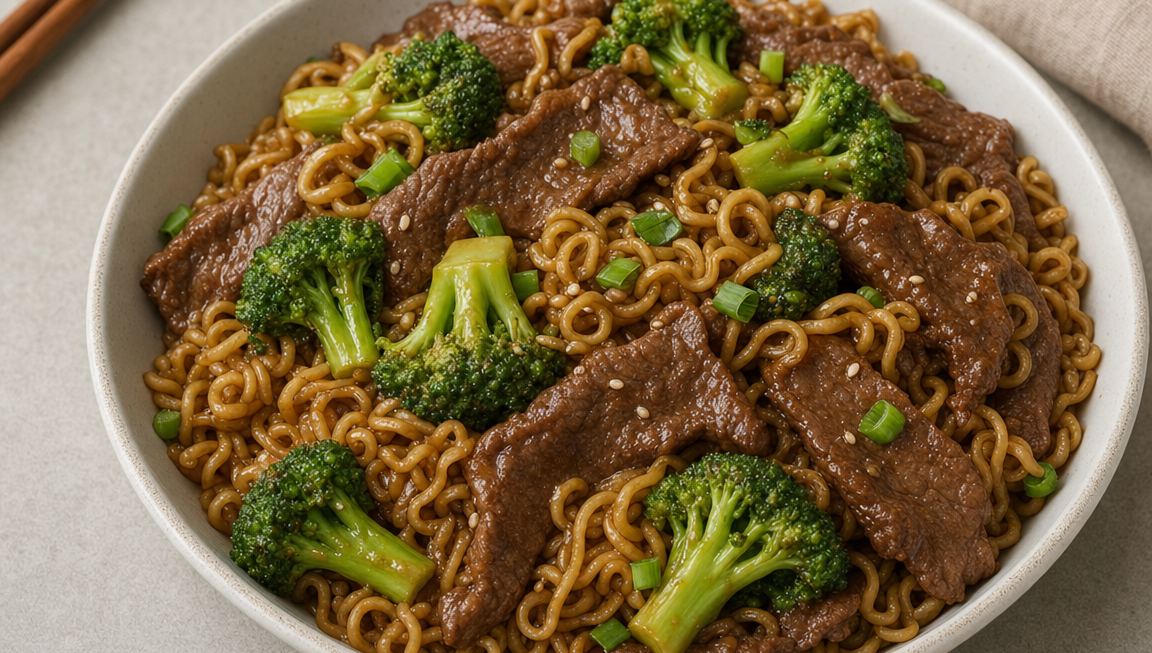
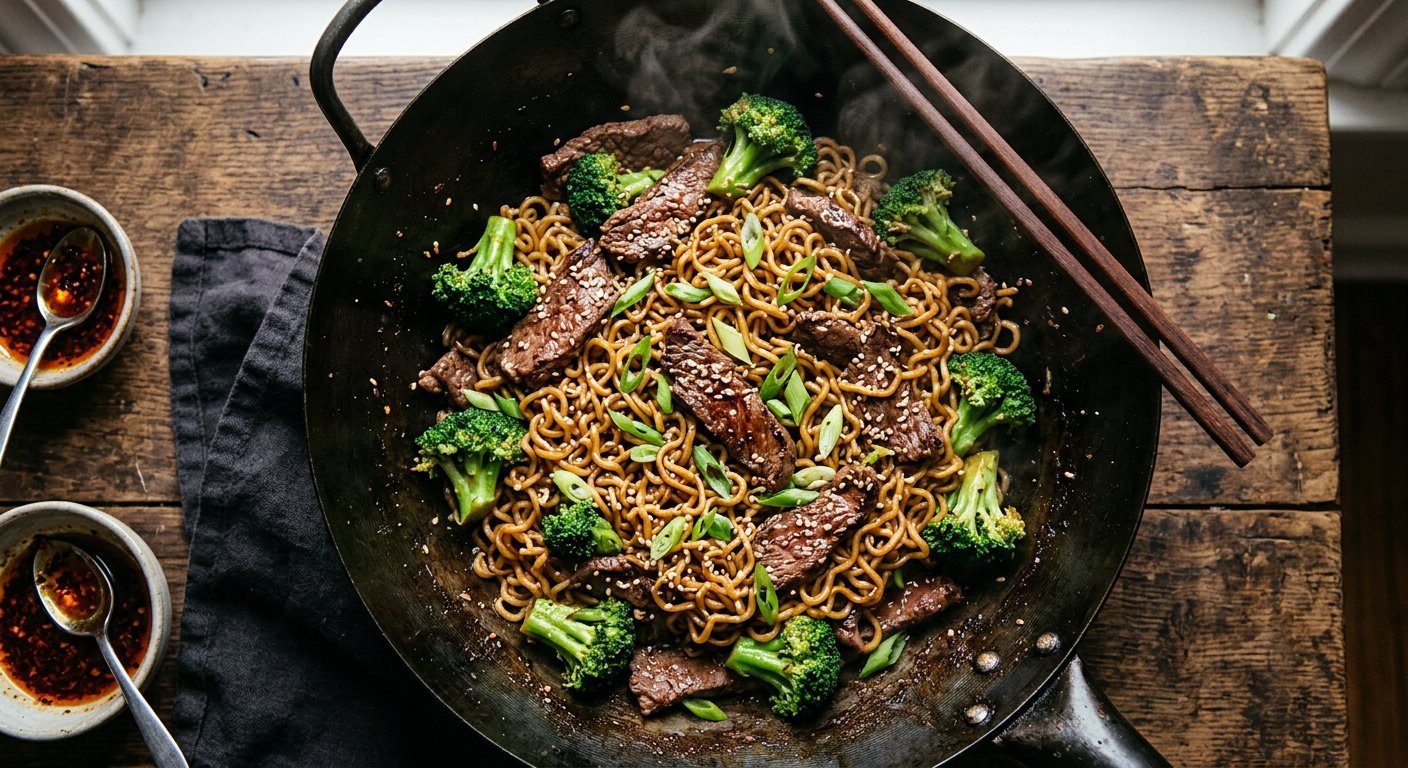
You’ll love how this beef and broccoli ramen stir fry delivers that takeout-style glossy sauce in about 25 minutes, using instant ramen noodles instead of anything special. Tender seared beef, crisp-tender broccoli, and a soy-garlic sauce that clings to every strand. The trick is velveting the beef first. Here’s exactly how I make it.
The Magic Behind This Dish 🪄
- Restaurant texture at home: A cornstarch velveting step keeps the beef silky instead of tough.
- Ramen instead of lo mein: Cheap instant noodles have exactly the right chew — just bin the seasoning packet.
- 25 minutes start to finish: Faster than delivery, and you control the sodium.
- One pan for the sauce and noodles: Everything finishes together in the wok.
Incredible Flavor Depth 🌊
Oyster sauce, soy, brown sugar and toasted sesame oil build a savoury-sweet base that tastes like it simmered far longer than it did. A splash of the starchy noodle water pulls it into a glaze rather than a puddle.
Fast but Flavorful 💨
Stir-frying is quick, but only if everything is chopped before the pan gets hot. Once the beef hits, you have about six minutes of continuous cooking.
Shopping List 🛍️
Flank steak is the right cut here, and how you slice it matters more than the grade. Cut across the grain into strips no thicker than a quarter inch — with the grain and even good beef turns chewy. Freezing the steak for 15 minutes firms it up and makes thin slicing far easier.
- 1 pound (454g) flank steak, sliced thin across the grain
- 3 packets (about 9 oz / 255g) instant ramen noodles, seasoning packets discarded
- 4 cups broccoli florets, cut small
- 1 tablespoon cornstarch (for the beef)
- 2 tablespoons neutral oil, divided
- 4 cloves garlic, minced
- 1 tablespoon fresh ginger, grated
- 1/3 cup low-sodium soy sauce
- 3 tablespoons oyster sauce
- 2 tablespoons light brown sugar
- 1 tablespoon rice vinegar
- 2 teaspoons toasted sesame oil
- 1 tablespoon cornstarch whisked into 1/4 cup cold water (slurry)
- Sliced scallions and toasted sesame seeds, to finish
The Process ⚙️
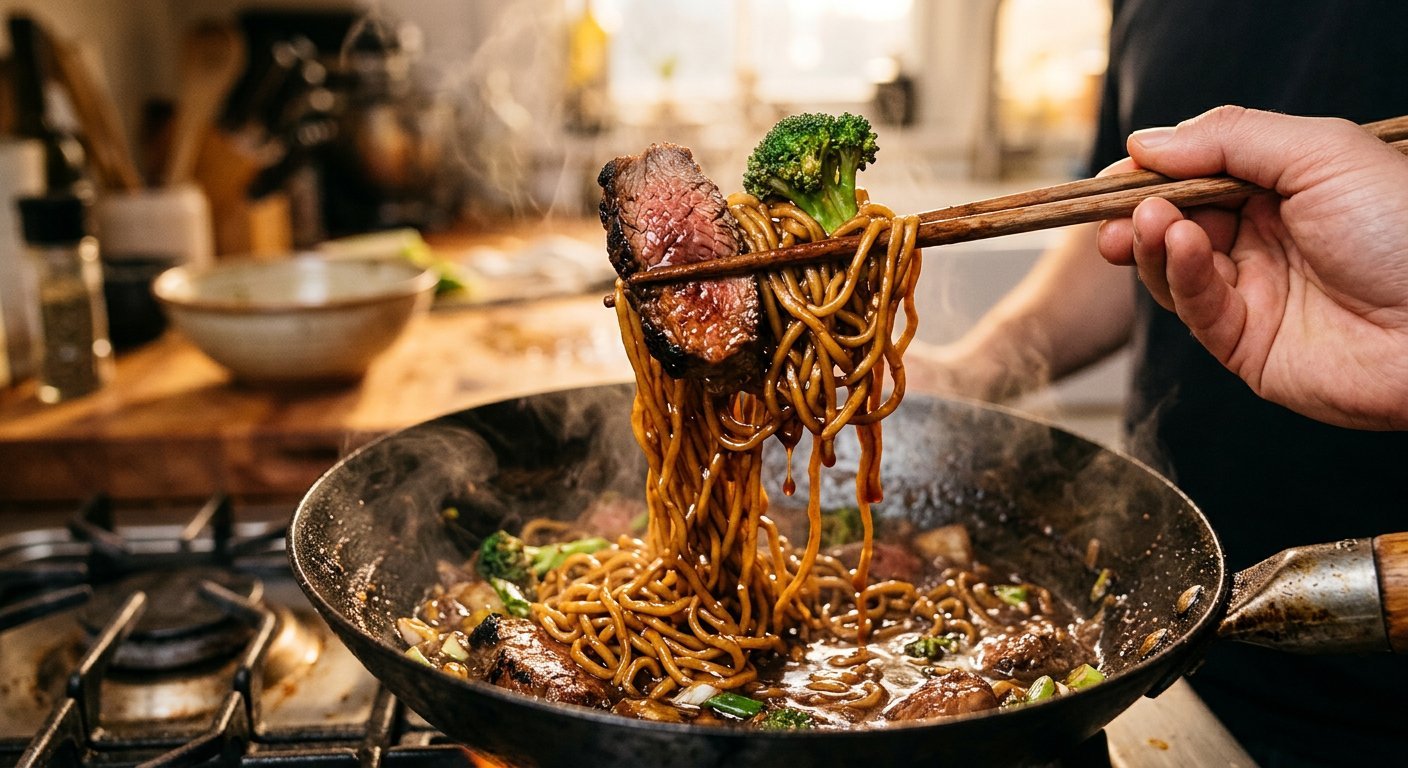
Have everything cut, measured and within arm’s reach before you turn on the heat. Stir-frying gives you no time to chop mid-cook.
- Velvet the beef. Toss the sliced steak with 1 tablespoon cornstarch until lightly coated and leave it 10 minutes while you prep everything else. The starch forms a thin barrier that holds moisture in during high-heat searing — this is the single technique that separates home stir fry from restaurant stir fry.
- Mix the sauce. Whisk the soy sauce, oyster sauce, brown sugar, rice vinegar and sesame oil in a bowl. Keep the cornstarch slurry separate for now.
- Cook the noodles just under. Boil the ramen for 2 minutes only — about a minute less than the packet says. They’ll finish in the sauce, and undercooking now is what stops them going mushy later. Reserve 1/2 cup of the noodle water, then drain and rinse briefly with cold water.
- Sear the beef in batches. Heat 1 tablespoon oil in a wok or large skillet over high heat until it just begins to smoke. Add half the beef in a single layer and leave it undisturbed 60 seconds before tossing. Cook about 2 minutes total, then remove. Repeat with the second batch. Crowding the pan drops the temperature and the beef steams grey instead of browning.
- Cook the broccoli. Add the last tablespoon of oil, then the broccoli. Stir-fry 2 minutes, add 3 tablespoons of water and cover for 90 seconds to steam through. It should be bright green and still have bite.
- Build the sauce. Push the broccoli aside, add the garlic and ginger to the bare pan and stir 30 seconds until fragrant — no longer, or the garlic turns bitter. Pour in the sauce mixture and bring to a simmer.
- Thicken and combine. Stir the slurry again (cornstarch settles fast) and pour it in, stirring constantly for about 45 seconds until the sauce turns glossy and coats a spoon. Return the beef, add the noodles, and toss everything for a minute. If it’s tight, loosen with the reserved noodle water a tablespoon at a time.
- Finish and serve. Off the heat, scatter with scallions and sesame seeds. Serve immediately — this is at its best in the first five minutes.
Pro Tips for Success 💡
Get the pan genuinely hot before anything goes in. Most home stir fries fail because the pan is merely warm, and the food releases moisture faster than it can evaporate. You want to see a faint shimmer and the first wisp of smoke from the oil.
Slice the beef across the grain, always. Look for the direction the muscle fibres run and cut perpendicular to them — this shortens the fibres and is the difference between tender and rubbery, regardless of how well you cook it.
Save the noodle water. That cloudy starch is what turns a thin sauce into something that clings (it’s the same principle as finishing Italian pasta, and it works identically here).
Cut the broccoli florets smaller than you think. Large florets need too long to cook through and by then the outside is soft. Bite-sized pieces cook evenly in the short window a stir fry allows.
Always re-stir the cornstarch slurry immediately before pouring. It separates within a minute, and pouring the clear liquid off the top leaves you with a sauce that never thickens.
Common Issues & Fixes ⚠️
The beef came out tough: Either sliced with the grain, cut too thick, or overcooked. Two minutes total in a screaming hot pan is genuinely enough for quarter-inch strips.
The noodles turned mushy: They were fully cooked before hitting the sauce. Pull them a minute early — they continue softening in the hot pan.
The sauce stayed watery: The slurry settled before you poured it, or the pan wasn’t at a simmer. Cornstarch needs actual heat to activate; bring it back to a bubble and stir.
Everything tastes too salty: Regular soy sauce instead of low-sodium, or you kept a ramen seasoning packet in. Discard the packets — they’re pure salt and they’ll wreck the balance.
How to Store 🏠
Refrigerate in an airtight container within 2 hours of cooking, per USDA guidance, and eat within 3-4 days. The noodles absorb sauce overnight and soften, so this is noticeably better fresh than reheated. Revive leftovers in a hot skillet with a splash of water rather than the microwave, which makes the beef rubbery.
Freezing isn’t recommended. Cooked ramen noodles break down badly on thawing and the texture becomes unpleasantly soft. If you want to work ahead, freeze the raw sliced beef in its marinade for up to 3 months and cook the noodles fresh.
Different Ways to Make It 🛤️
Swap the beef for thinly sliced chicken thigh, shrimp, or firm tofu. Chicken takes about the same time; shrimp needs only 90 seconds; tofu should be pressed and browned first, then added back at the end.
Add vegetables freely — sliced bell pepper, snap peas, shredded carrot and baby corn all work. Add firmer vegetables with the broccoli and delicate ones in the last minute.
For heat, stir in a tablespoon of chili garlic sauce or a teaspoon of gochujang with the sauce mixture. For a nuttier version, whisk in a tablespoon of peanut butter until it dissolves.
Gluten-free works with tamari in place of soy, a gluten-free oyster sauce, and rice noodles instead of ramen. Rice noodles need soaking rather than boiling, so follow their package directions.
What to Serve With This 🍽️
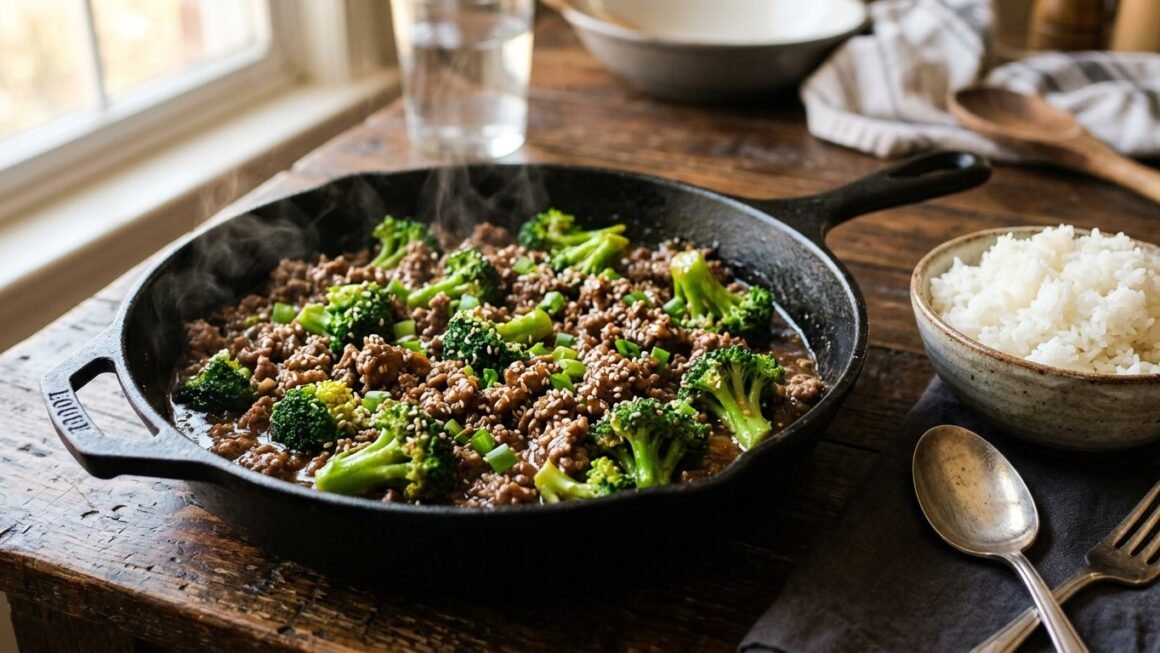
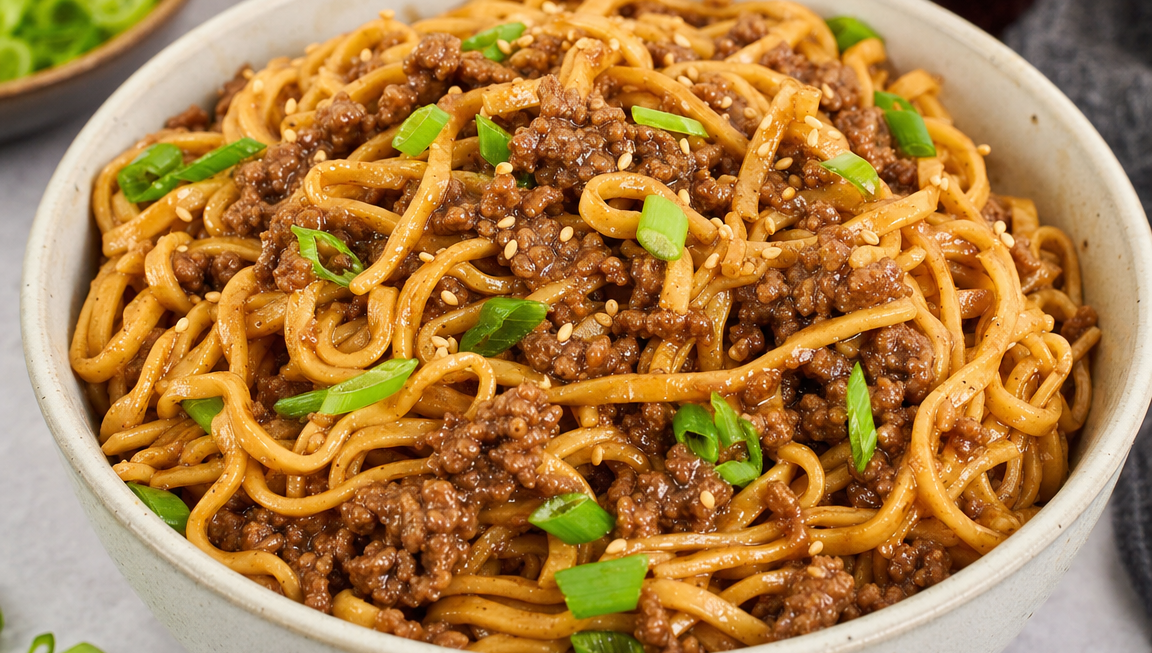
This is a complete one-bowl meal, but a light, sharp side balances the richness well. Quick smashed cucumber salad with rice vinegar takes three minutes and cuts straight through the sauce. Steamed edamame with flaky salt is the other easy option. For a rice-based version of the same flavours, ground beef and broccoli is even quicker. If you like this style of fast noodle dinner, Mongolian ground beef noodles uses cheaper ground beef and comes together even faster.
If you’re feeding a bigger group, creamy pasta salad is an unexpected but genuinely good partner for a casual spread. To drink, cold jasmine tea or a light lager both work well against the soy and sesame.
Common Questions ❓
Can I use a different cut of beef?
Sirloin, skirt steak and flat iron all work well. Avoid stewing cuts like chuck, which need long slow cooking to become tender and will stay tough in a stir fry no matter how thinly you slice them.
What if I don’t have oyster sauce?
Use hoisin sauce for a sweeter result, or add an extra tablespoon of soy plus a teaspoon of brown sugar. You’ll lose some savoury depth, but the dish still works.
Do I really need to velvet the beef?
It takes 10 seconds and it’s the most noticeable upgrade in the recipe. Skipping it gives you beef that’s fine but drier. The cornstarch coating also helps the sauce cling.
Can I make this ahead for meal prep?
Partly. Slice the beef, mix the sauce and cut the broccoli up to two days ahead. Cook the noodles and stir fry fresh — this dish loses more in storage than most.
How many does this serve?
Four generous portions. It doubles, but cook in two separate batches — a doubled quantity in one pan drops the heat too far to sear properly.
Nutrition Information 📊
Per serving, based on 4 servings. These figures are (estimated — verify before publishing) and were not calculated against a live USDA database.
- Calories: 620 (estimated)
- Protein: 36g
- Carbohydrates: 62g
- Dietary Fiber: 4g
- Total Sugars: 12g
- Total Fat: 25g
- Saturated Fat: 8g
- Sodium: 1,340mg
- Cholesterol: 68mg
Macro Breakdown: Protein 23% / Carbs 40% / Fat 36% of calories.
Diet Tags: Dairy-free, nut-free.
Allergens: Contains wheat (ramen, soy sauce), soybeans, shellfish (oyster sauce), sesame. May contain egg depending on the ramen brand.
Nutrition Notes: Sodium is the figure to watch here — using low-sodium soy sauce and discarding the ramen seasoning packets already cuts it substantially versus takeout. Adding an extra two cups of broccoli increases fibre and volume without meaningfully changing calories.
Final Thoughts ❤️
What makes this worth making on a weeknight is that nothing in it is difficult — it’s just a sequence that has to happen quickly and in the right order. Velvet the beef, keep the pan hot, undercook the noodles, and you get something genuinely close to what you’d pay three times as much for. Prep everything first and the cooking itself takes under ten minutes.
Nutrition is an estimate and varies by brand and portion.