
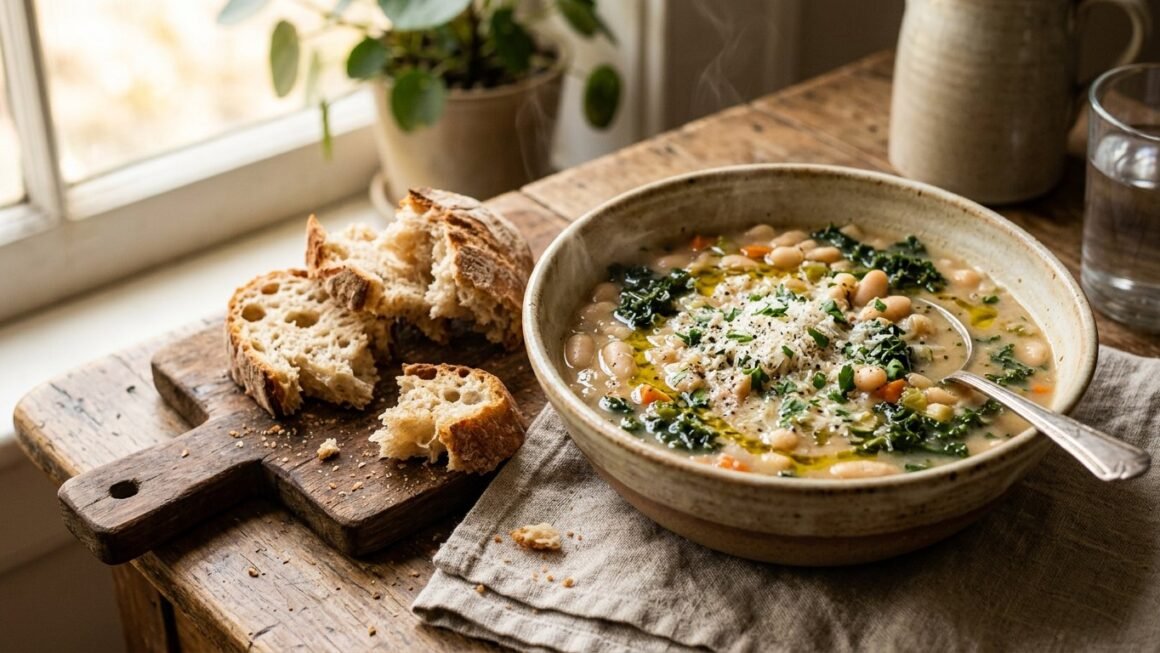
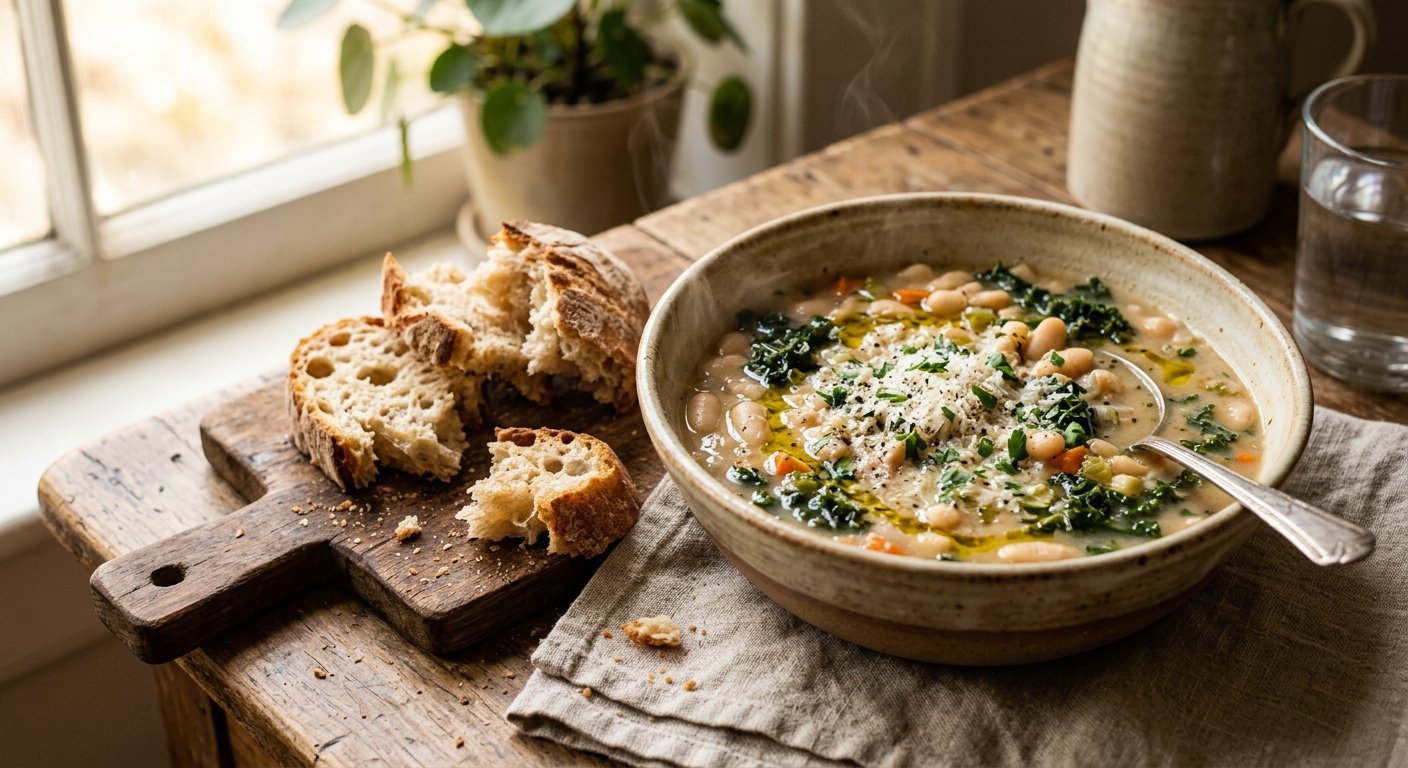
You’ll love how this Tuscan white bean soup tastes creamy without a drop of cream. Blending a portion of the beans is what does it — a five-second trick that turns a thin broth into something silky and substantial. Add kale, good olive oil and parmesan, and you have an easy healthy dinner from mostly pantry ingredients. Here’s exactly how I make it.
Why This Recipe Works So Well 🎯
- Creamy with no dairy in the base: Blended beans provide the body.
- Mostly pantry ingredients: Canned beans, broth, and whatever greens you have.
- Better the next day: One of the few dishes that genuinely improves overnight.
- Naturally high in fibre: 12g per serving from the beans and greens.
Nutritious Without Compromise 💪
It’s genuinely filling for around 320 calories a bowl, and the protein and fibre from the cannellini beans keep you full for hours rather than an hour.
Simple Ingredients, Big Results 🧄
Nothing here is expensive or hard to find, and the depth comes from technique — browning the vegetables properly and using a parmesan rind — rather than from anything costly.
What You’ll Need 📝
Save the rind next time you finish a wedge of parmesan and keep it in the freezer. Dropped into the pot it releases glutamates as it simmers and adds a savoury depth that’s difficult to get any other way. It’s the closest thing to a free upgrade in cooking.
- 3 (15 oz / 425g) cans cannellini beans, drained and rinsed
- 4 cups vegetable or chicken broth, low sodium
- 1 large yellow onion, diced
- 3 carrots, diced
- 3 stalks celery, diced
- 5 cloves garlic, minced
- 1 bunch kale, stems removed and leaves chopped (about 5 cups)
- 1 (14.5 oz / 411g) can diced tomatoes, drained
- 3 tablespoons extra virgin olive oil, plus more to finish
- 2 teaspoons dried rosemary, or 1 tablespoon fresh
- 1 teaspoon dried thyme
- 2 bay leaves
- 1 parmesan rind (optional but recommended)
- 1 tablespoon red wine vinegar
- 1 teaspoon kosher salt, plus more to taste
- 1/2 teaspoon black pepper
- Grated parmesan, to serve
The Process ⚙️
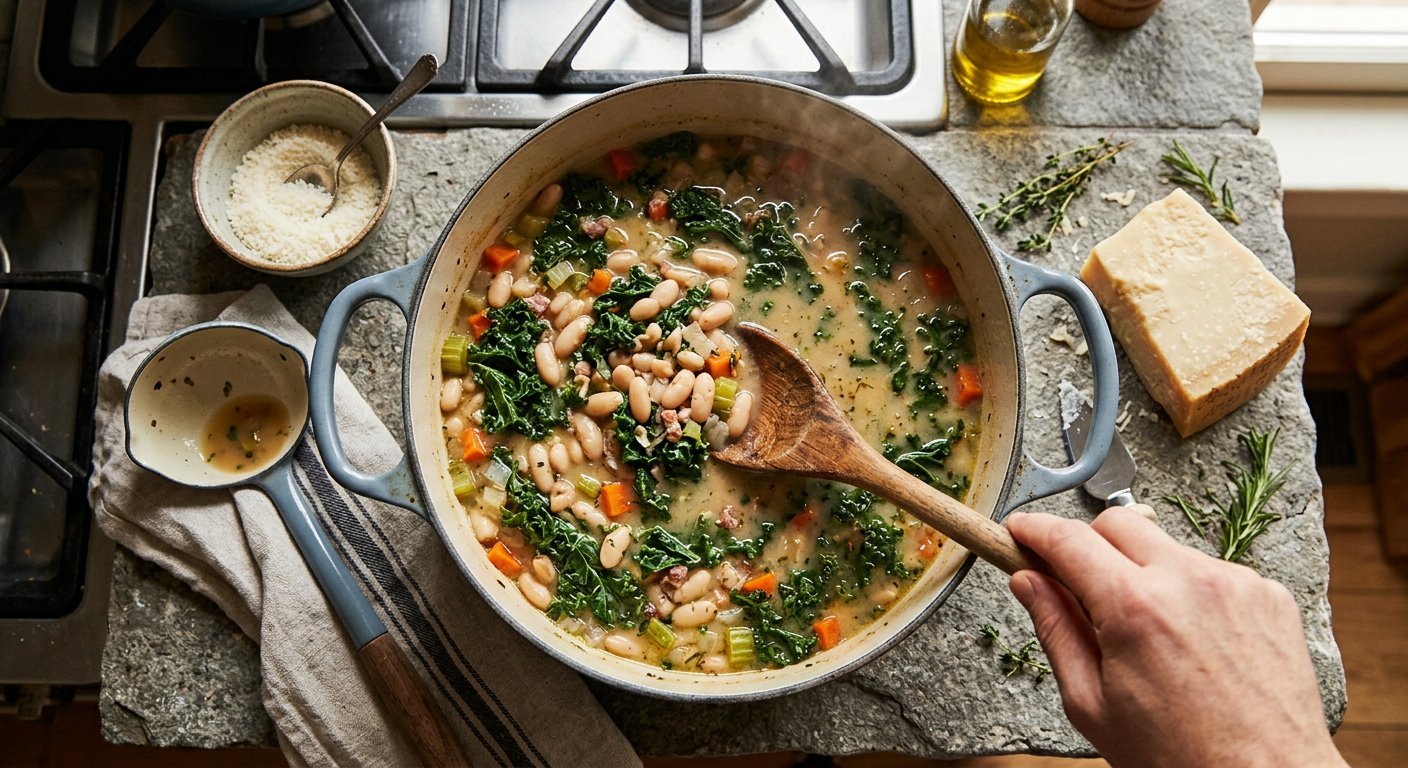
Don’t rush the first step. Ten minutes of properly softened vegetables is the entire flavour foundation of a soup this simple.
- Build the soffritto. Heat the olive oil in a large Dutch oven over medium and add the onion, carrot and celery with a pinch of salt. Cook 10 minutes, stirring occasionally, until genuinely soft and just starting to colour at the edges. Rushing this on high heat browns the outsides without softening the insides, and the soup tastes noticeably thinner as a result.
- Add the garlic and herbs. Stir in the garlic, rosemary and thyme and cook 1 minute until fragrant. Dried herbs need contact with hot fat to release their oils, which is why they go in here rather than with the liquid.
- Add everything else. Tip in the beans, drained tomatoes, broth, bay leaves and parmesan rind. Season with the salt and pepper and bring to a simmer.
- Simmer gently. Cook uncovered at a low simmer for 25 minutes. You want lazy bubbles, not a rolling boil — hard boiling breaks the beans apart and makes the soup cloudy rather than creamy.
- Blend part of it. Remove the bay leaves and rind. Scoop out roughly 2 cups of soup, blend until completely smooth, and stir it back in. This is what creates the creamy body. An immersion blender works too — just pulse briefly in one spot rather than blending the whole pot, or you’ll lose all the texture.
- Add the kale. Stir in the chopped kale and simmer another 5-7 minutes until tender but still deep green. Kale holds up well; if you’re using spinach instead, add it in the last 60 seconds.
- Finish with acid. Off the heat, stir in the red wine vinegar. A soup built on beans and broth tastes flat without something sharp at the end, and this one tablespoon is what makes everything else taste defined.
- Serve. Ladle into bowls, drizzle generously with good olive oil and top with grated parmesan.
Expert Techniques 👨🍳
Rinse your canned beans thoroughly. The starchy liquid in the tin tastes metallic and it’s a large part of why canned-bean soups can taste tinny. Thirty seconds under the tap fixes it.
Blend less than you think. Two cups out of a large pot is the right ratio — enough to thicken everything, little enough that you still get whole beans and distinct vegetables in every spoonful (blend too much and it becomes a purée rather than a soup).
Finish with olive oil in the bowl, not the pot. Raw good-quality olive oil has a peppery, grassy character that disappears entirely when heated. Drizzling it over each serving is where a lot of the Tuscan character actually comes from.
Strip the kale stems properly. Hold the base of the stem and pull the leaf away with your other hand. The stems stay tough and fibrous no matter how long they simmer.
Taste for salt at the very end, after the vinegar. Acid changes how salt registers, and seasoning before you add it usually leads to over-salting.
When Things Go Wrong 🤔
The soup is thin and watery: Not enough was blended, or the simmer was too short. Blend another cup and stir it back through — it thickens immediately.
It tastes bland despite the seasoning: Almost always missing acid. Add the vinegar if you skipped it, or a squeeze of lemon. If it’s still flat, it needs more salt than you think.
The beans turned to mush: The pot boiled rather than simmered. Keep it at a gentle bubble; canned beans are already fully cooked and only need warming through.
The kale is tough: Either the stems weren’t removed or it went in too late. Give it a full 5-7 minutes in the simmering soup.
Storage & Shelf Life ❄️
Refrigerate within 2 hours in an airtight container and use within 4 days, per USDA guidance for cooked vegetables and broth-based soups. This genuinely improves overnight as the flavours settle. It thickens considerably in the fridge, so loosen with a splash of broth when reheating. Discard if you notice a sour smell or any fizzing, which indicates fermentation.
This is one of the best soups for freezing because there’s no dairy in the base to split. Freeze in portions for up to 3 months, thaw overnight in the fridge and reheat gently. The kale softens slightly on thawing but the texture holds up well overall. If you’re freezing deliberately, hold the kale back and add it fresh when reheating.
Recipe Variations 🔄
Add Italian sausage for a heartier version — brown 12 ounces of it first, remove, and build the soffritto in the rendered fat. Pancetta or bacon works the same way.
Swap the kale for spinach, chard or escarole. Spinach and chard need only a minute or two, so add them right at the end rather than simmering.
Add a cup of small pasta like ditalini in the last 10 minutes to turn this into something closer to pasta e fagioli. You’ll need an extra cup of broth, since the pasta absorbs a fair amount.
For heat, add half a teaspoon of red pepper flakes with the garlic. For a smokier version, use smoked paprika alongside the rosemary. If you want a brothier, brighter soup instead, anti-inflammatory turmeric chicken soup is built on the same principles. If you want something richer in the same comfort category, jalapeño popper soup goes in the opposite direction entirely.
Perfect Pairings 🤝
For a heartier lunch, hot Italian sub sliders alongside a bowl of this works well. Crusty bread is essentially mandatory — a good sourdough or ciabatta for tearing and dipping. Garlic bread works if you want something more substantial, and a simple rocket salad with lemon keeps the meal light.
For a bigger spread, Greek sheet pan chicken shares the Mediterranean profile and can roast while the soup simmers. To drink, a Chianti or any medium-bodied Italian red, or sparkling water with lemon.
Quick Answers ⚡
Can I use dried beans instead of canned?
Yes. Use about 1 1/2 cups dried cannellini, soaked overnight and simmered until tender before starting the recipe, which takes roughly an hour. Save the cooking liquid and use it in place of some of the broth for extra body.
Is this soup vegan?
Nearly. Use vegetable broth, skip the parmesan rind and finishing cheese, and it’s fully vegan. Add a tablespoon of nutritional yeast to replace some of the savoury depth the parmesan provides.
Do I need a blender?
Not strictly. You can mash a cup of beans against the side of the pot with a wooden spoon or a potato masher. It’s less silky but it achieves the same thickening effect.
What if I can’t find cannellini beans?
Great Northern beans are the closest substitute and behave identically. Butter beans work too, though they’re softer and break down more readily when blended.
How many does this serve?
Six generous bowls as a main with bread, or eight as a starter. It doubles easily in a large stockpot with no changes to the method.
Nutritional Breakdown 📋
Per serving, based on 6 servings without bread. These figures are (estimated — verify before publishing) and were not calculated against a live USDA database.
- Calories: 320 (estimated)
- Protein: 15g
- Carbohydrates: 44g
- Dietary Fiber: 12g
- Total Sugars: 7g
- Total Fat: 9g
- Saturated Fat: 1.5g
- Sodium: 620mg
- Cholesterol: 0mg
Macro Breakdown: Protein 19% / Carbs 55% / Fat 25% of calories.
Diet Tags: Vegetarian, dairy-free if parmesan is omitted, nut-free, high in fibre.
Allergens: Contains milk if you use the parmesan rind and topping. No other major allergens.
Nutrition Notes: At 12g per serving this qualifies as high in fibre, providing well over 20% of the daily value. Sodium depends heavily on your broth — using low-sodium and rinsing the beans keeps it in a reasonable range. This is general nutritional information, not medical advice.
The Bottom Line 🎯
The blending step is what makes this recipe worth bookmarking. Without it you have a decent bean and vegetable soup; with it you have something that tastes like it was finished with cream, made from three cans of beans and whatever vegetables were in the drawer. Take the ten minutes on the soffritto, don’t skip the vinegar, and this becomes a genuine weeknight staple.
Nutrition is an estimate and varies by brand and portion.