
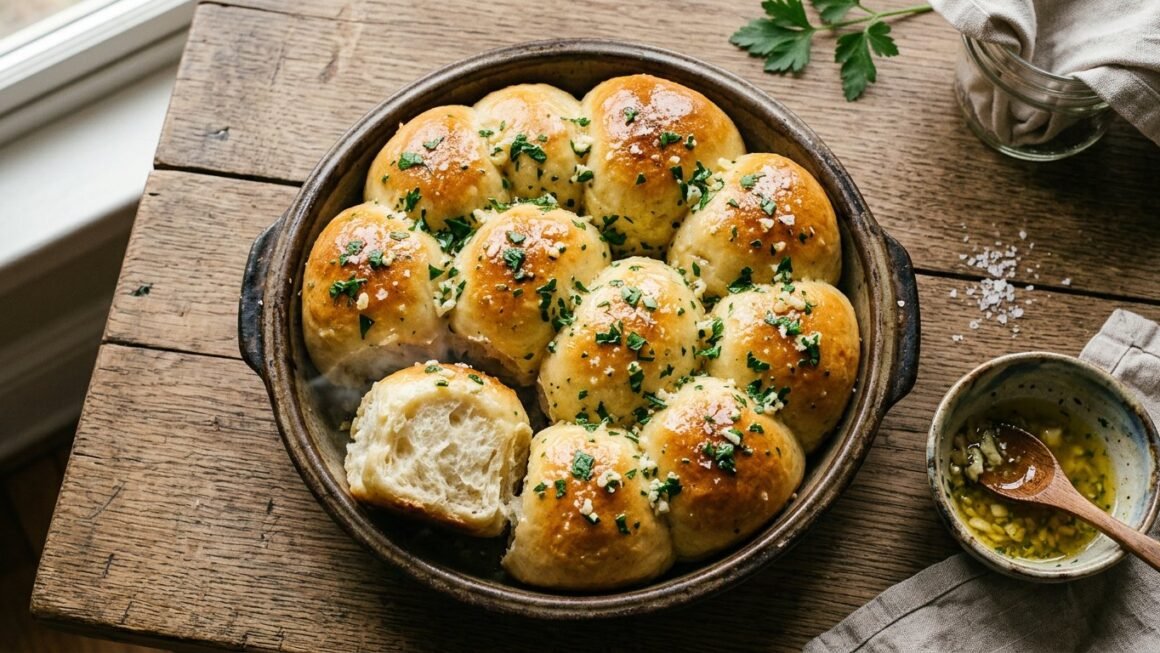
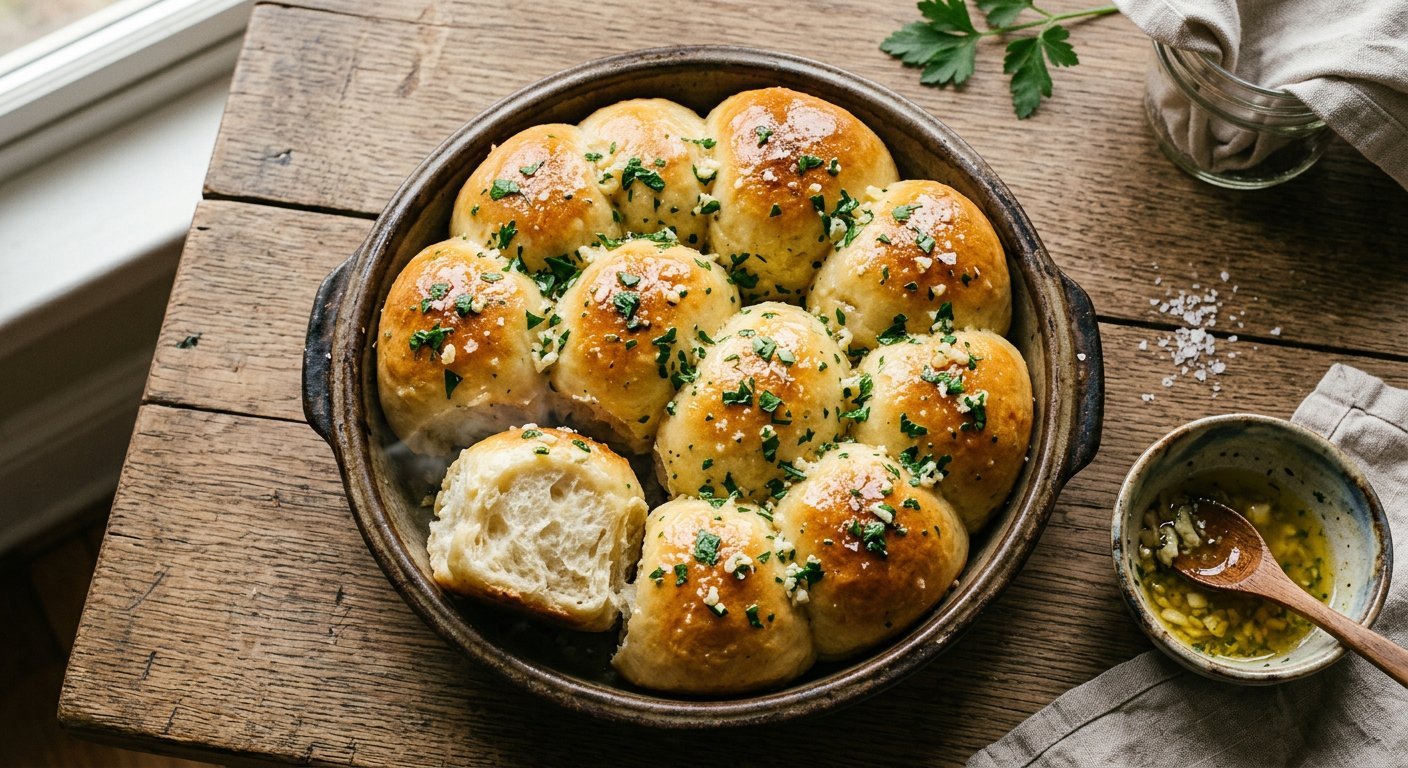
Try these garlic butter bread rolls if you have always been slightly afraid of yeast. They are soft, pillowy, pull-apart rolls brushed twice with garlic butter, and the dough is genuinely forgiving. The one thing that decides whether they rise properly is the temperature of your milk. Here’s exactly how I make them.
Why You’ll Love This Recipe ❤️
- Genuinely soft and pillowy: An enriched dough with milk, butter and egg stays tender for days.
- Buttered twice: Once before baking and once straight out of the oven.
- Forgiving for beginners: Enriched doughs are far more tolerant of handling than lean bread dough.
- Make-ahead friendly: Shape the night before and bake fresh in the morning.
Simple Ingredients, Big Results 🧄
Flour, milk, butter, egg, sugar, yeast and garlic. Nothing here is unusual, and the result tastes like a bakery product.
Crowd-Pleasing Success 🎉
Twelve rolls disappear at any table, and they are the single best thing you can put next to a bowl of soup.
What You’ll Need 📝
Weigh the flour if you can. Scooping from the bag can pack in up to 20 percent extra, and in bread that turns a soft dough into a dense one. Also check your yeast date — expired yeast is the reason most rolls fail to rise, and there is no rescuing it later.
For the Dough 🥣
- 1 cup (240ml) whole milk, warmed to 110°F (43°C)
- 2 1/4 teaspoons instant yeast (one 7g packet)
- 3 tablespoons granulated sugar
- 3 1/2 cups (437g) all-purpose flour
- 1 large egg, room temperature
- 4 tablespoons (57g) unsalted butter, softened
- 1 1/2 teaspoons kosher salt
For the Garlic Butter 🧈
- 6 tablespoons (85g) unsalted butter, melted
- 5 cloves garlic, finely minced
- 2 tablespoons fresh parsley, chopped
- 1/2 teaspoon flaky sea salt
Step-by-Step Instructions 👩🍳
Check your milk temperature with a thermometer if you have one. This is the step people guess at and it matters more than anything else here.
- Warm the milk correctly. Heat the milk to 110°F. Too cool and the yeast stays sluggish; above roughly 130°F and you kill it outright. If you have no thermometer, it should feel like comfortable bath water on your wrist — warm but not hot. Stir in the sugar and yeast and leave 5 minutes until foamy. No foam means dead yeast, and you should start again with a fresh packet.
- Mix the dough. Add the flour, egg, softened butter and salt. Mix on low with a dough hook for 2 minutes until it comes together, then increase to medium and knead 6-8 minutes. By hand, knead 10-12 minutes on a lightly floured surface.
- Check the texture. The dough should be slightly tacky to the touch but not stick to your fingers when you pull away. Resist adding more flour — enriched doughs are meant to feel softer than lean bread dough, and extra flour is what makes rolls dense.
- First rise. Place in a greased bowl, cover, and leave somewhere warm 60-90 minutes until doubled. To test, press two fingers into the dough; if the indent stays, it is ready. If it springs straight back it needs longer.
- Shape the rolls. Knock the dough back and divide into 12 equal pieces — weigh them if you want them uniform, around 70g each. Roll each into a tight ball by cupping your hand over it and moving in circles against the counter. Arrange in a greased 9×13 dish with a small gap between each.
- Second rise. Cover and leave 45-60 minutes until puffy and just touching each other. Meanwhile heat the oven to 375°F (190°C) and mix the melted butter, garlic, parsley and flaky salt.
- Butter and bake. Brush the risen rolls with half the garlic butter, then bake 20-25 minutes until deep golden. They are done at an internal temperature of 190°F if you want certainty.
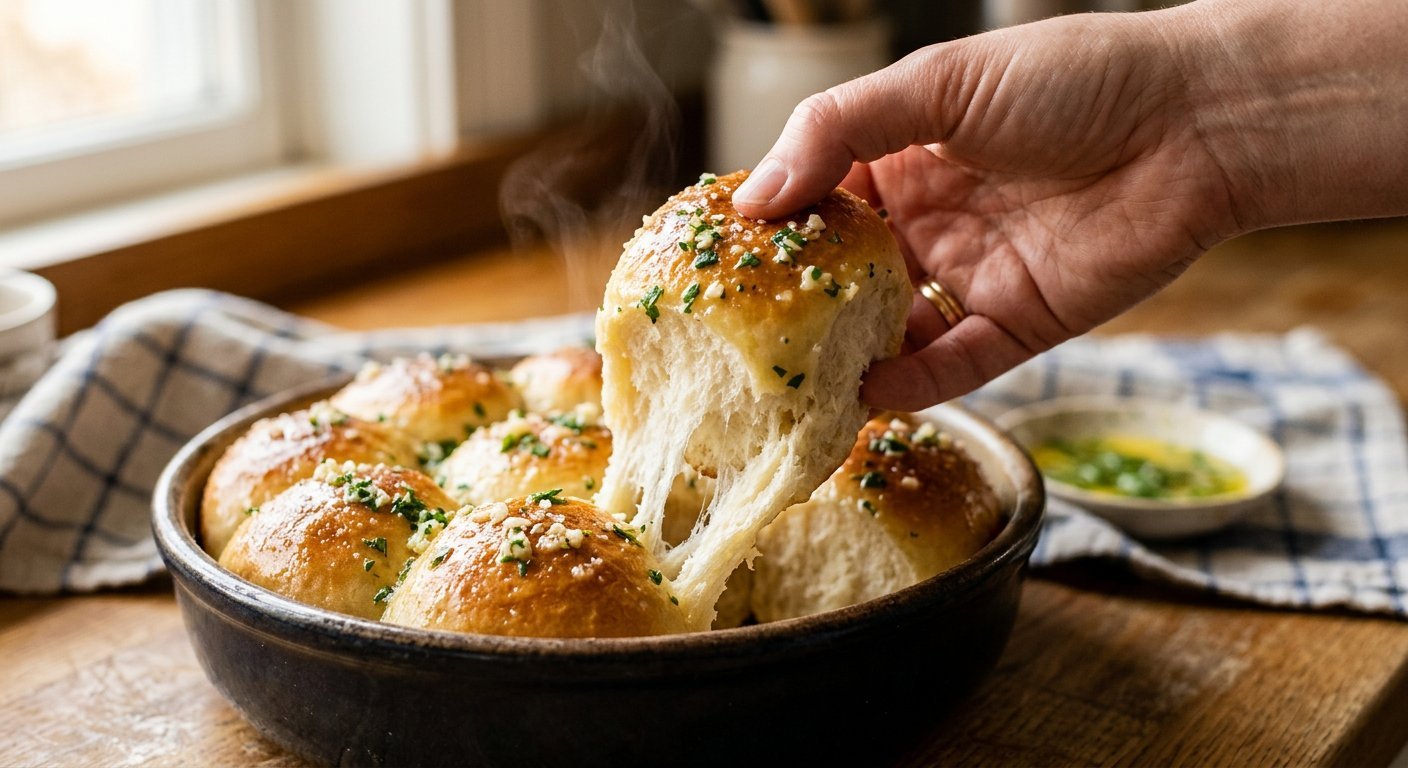
- Butter again. Brush the remaining garlic butter over the moment they leave the oven, while they are hot enough to absorb it. This second coat is where most of the garlic flavour actually comes from. Serve warm.
Pro Tips for Success 💡
Butter them twice, without exception. The first coat bakes into the crust and browns; the second soaks into hot bread and carries the raw garlic and parsley flavour that heat would otherwise destroy (skip the second and they taste noticeably plainer).
Find a genuinely warm spot for rising. An oven with just the light on, or a turned-off oven with a bowl of boiling water on the shelf below, both work well. Cold kitchens can double your rise time and people usually give up too early.
Mince the garlic finely rather than pressing it. Pressed garlic releases more water and can burn in the butter, while finely minced garlic distributes evenly and stays sweet.
Weigh the dough portions. It takes an extra minute and it means every roll bakes in the same time — unevenly sized rolls give you some pale and some overdone in the same dish.
Do not add flour during kneading unless the dough is genuinely unmanageable. Tacky is correct. A dough that feels slightly too soft produces rolls that feel exactly right.
Common Issues & Fixes ⚠️
The dough never rose: Dead yeast or milk that was too hot. The foam test after 5 minutes tells you before you have wasted the flour — if there is no foam, discard and start over.
The rolls are dense and heavy: Too much flour, or the second rise was cut short. Let them get properly puffy before they go in the oven.
The bottoms burned: A dark metal pan or a rack set too low. Use the middle rack and consider a glass or light-coloured dish.
The tops browned before the middle cooked: Oven running hot. Tent loosely with foil for the last 8 minutes and check for 190°F in the centre.
Storage & Shelf Life ❄️
Keep in an airtight container at room temperature for up to 3 days. Refrigeration actually makes bread go stale faster because of starch retrogradation, so the counter is the right place. Refresh a day-old roll by warming it 8-10 minutes in a 300°F oven, which softens the crumb again.
These freeze very well. Freeze fully baked and cooled rolls in a sealed bag for up to 3 months, then reheat from frozen at 325°F for 12-15 minutes. You can also freeze the shaped unbaked rolls: freeze on a tray, transfer to a bag, then thaw in the dish and let them do their second rise before baking as normal.
Recipe Variations 🔄
Add cheese by pressing a cube of mozzarella into the centre of each ball before shaping, or scatter grated parmesan over the tops before baking.
Make them herb-forward with a teaspoon of dried Italian seasoning in the dough and fresh rosemary in the butter instead of parsley.
For a sweeter dinner roll, leave out the garlic entirely and brush with plain melted butter and a drizzle of honey.
Dairy-free works with oat milk and a good plant butter, though the crumb is slightly less rich. If you are serving these with soup, Tuscan white bean soup is the pairing I make most often.
What to Serve With This 🍽️
Soup is the obvious answer and the best one. Tuscan white bean soup and these rolls make a complete meal, and they are equally good alongside jalapeño popper soup for something richer.
For something sweet from the same oven, salted brownie crinkle cookies take about twelve minutes. They also work as a side for any roast dinner, or split and filled with butter and ham for lunch the next day. To drink, nothing in particular — these are a supporting act.
Common Questions ❓
Can I use active dry yeast instead of instant?
Yes, in the same quantity. Active dry needs the full 5-10 minute proof in warm milk before you add anything else, which this recipe already does, so no other changes are needed.
Can I make the dough the night before?
Yes. After shaping, cover the dish and refrigerate overnight. Take it out 60-90 minutes before baking to come to room temperature and finish rising. The slow cold rise improves the flavour.
Do I need a stand mixer?
No. Knead by hand for 10-12 minutes instead. The dough is soft and slightly sticky at first but comes together as the gluten develops. Use a bench scraper rather than adding flour.
How do I know when they are baked through?
Deep golden on top and 190°F in the centre of a middle roll. If you tap the top it should sound hollow rather than dull.
How many rolls does this make?
Twelve rolls in a 9×13 dish. The recipe doubles well but use two dishes rather than crowding one, or the centre rolls will not bake through.
Nutrition Information 📊
Per roll, based on 12 rolls. These figures are (estimated — verify before publishing) and were not calculated against a live USDA database.
- Calories: 265 (estimated)
- Protein: 6g
- Carbohydrates: 33g
- Dietary Fiber: 1g
- Total Sugars: 4g
- Total Fat: 12g
- Saturated Fat: 7g
- Sodium: 320mg
- Cholesterol: 45mg
Macro Breakdown: Protein 9% / Carbs 50% / Fat 41% of calories.
Diet Tags: Vegetarian, nut-free.
Allergens: Contains wheat, milk (milk and butter) and eggs.
Nutrition Notes: The garlic butter accounts for roughly 60 calories per roll. Using half the butter for brushing still gives good flavour at around 235 calories each. Sodium comes mainly from the dough salt and the flaky finishing salt.
Final Thoughts ❤️
Homemade rolls have a reputation for being fussy, and almost all of that comes down to two things people get wrong: milk temperature and cutting the second rise short. Get those right and this dough is genuinely hard to ruin. Butter them twice, serve them warm, and they will be the thing people remember from the meal.
Nutrition is an estimate and varies by brand and portion.