
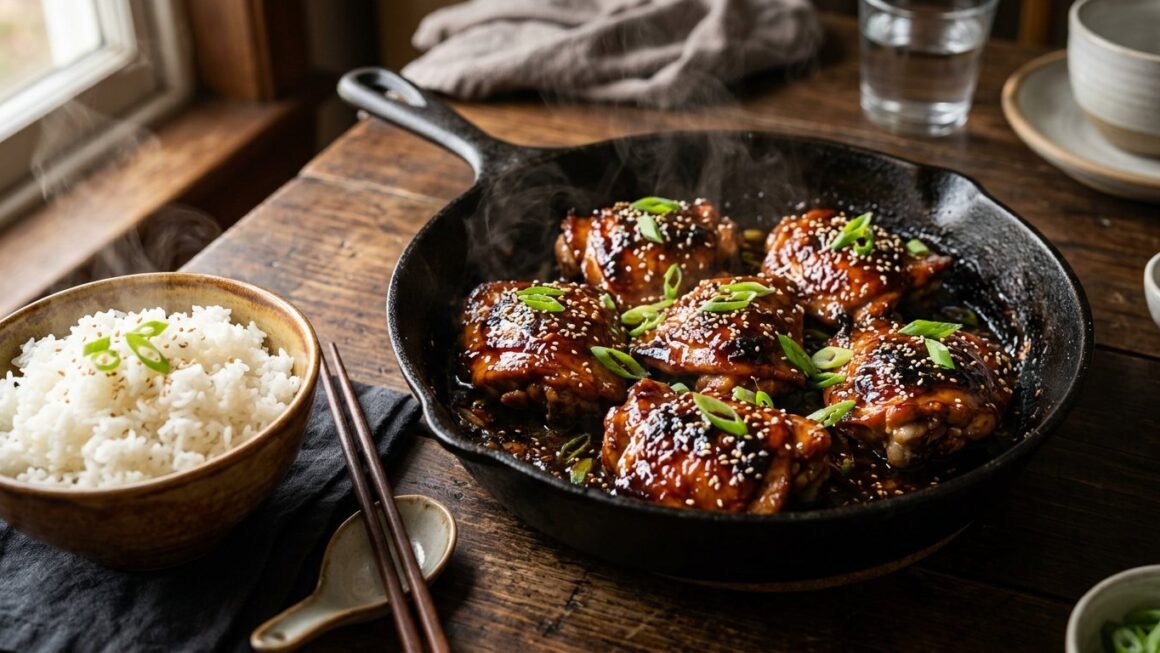
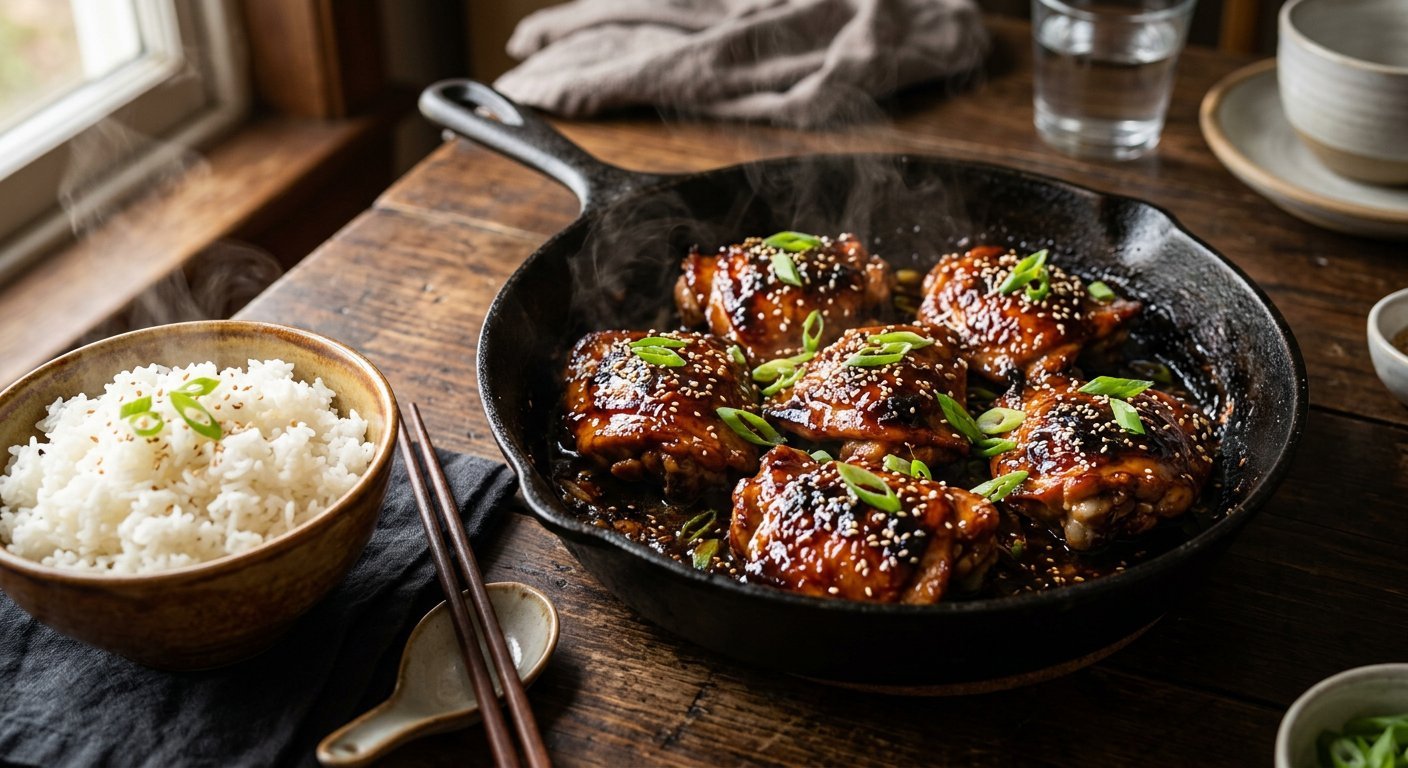
This teriyaki chicken recipe delivers juicy, caramelised chicken thighs coated in a glossy homemade sauce — and it’s on the table in 25 minutes flat. No bottled teriyaki, no obscure ingredients, no guesswork. Just five pantry staples, one skillet, and a technique that nails that sticky-sweet char every single time.
🥣 Ingredients
Serves 4 | Prep: 5 min | Cook: 20 min
For the chicken:
- 680 g (1.5 lb) boneless, skinless chicken thighs — patted completely dry with paper towels
- 1 tablespoon (15 ml) neutral oil (grapeseed or avocado)
- Pinch of fine sea salt
- Pinch of freshly ground black pepper
For the teriyaki sauce:
- 80 ml (⅓ cup) low-sodium soy sauce
- 60 ml (¼ cup) mirin (true mirin, not aji-mirin — check the label)
- 2 tablespoons (30 ml) sake or dry sherry
- 2 tablespoons (25 g) light brown sugar, packed
- 1 clove garlic, finely grated on a Microplane
- 1 teaspoon (5 g) fresh ginger, finely grated
- 1½ teaspoons (4 g) cornstarch whisked into 1 tablespoon (15 ml) cold water (slurry)
Optional garnish: toasted sesame seeds, thinly sliced spring onions
Room-temp note: Pull chicken from the fridge 10 minutes before cooking. Cold thighs in a hot skillet drop the pan temperature and prevent proper browning.
⏱️ Step-by-Step Instructions
1. Mix the sauce. Whisk soy sauce, mirin, sake, brown sugar, garlic, and ginger together in a small bowl. Set the cornstarch slurry beside the stove — you’ll add it later. Do not combine them yet or the starch will clump before it can do its job.
2. Dry and season the chicken. Lay thighs on a double layer of paper towels. Press firmly to wick away surface moisture — this is the single biggest factor in achieving a sear rather than a steam. Season both sides with salt and pepper.
3. Sear the chicken. Heat the oil in a 30 cm (12-inch) stainless steel or cast-iron skillet over medium-high heat until it just begins to shimmer (about 90 seconds). Place thighs presentation-side down. Do not move them. Cook undisturbed for 5–6 minutes until the underside is deep golden brown and releases easily from the pan.
Pro tip: If the chicken sticks when you try to flip, it isn’t ready. Give it another 30 seconds and check again.
4. Flip and finish cooking. Turn each thigh and cook the second side for 4–5 minutes. Check doneness: an instant-read thermometer inserted into the thickest part should read 74°C (165°F). Transfer thighs to a cutting board and let them rest.
5. Build the glaze. Reduce heat to medium. Pour the sauce mixture into the same skillet — it will bubble aggressively on contact with the fond (those flavour-packed browned bits). Stir with a wooden spoon to deglaze. Let the sauce simmer for 60–90 seconds until it smells fragrant and the raw garlic edge disappears.
6. Thicken. Give the cornstarch slurry one final whisk (it settles fast), then pour it into the simmering sauce while stirring constantly. The sauce will thicken within 15–20 seconds to a syrupy, spoon-coating consistency. Remove from heat immediately — overcooking cornstarch breaks the gel and thins the sauce back out.
7. Glaze and serve. Slice rested chicken against the grain into 1 cm strips. Return strips to the skillet and toss gently to coat, or arrange on a plate and spoon the glaze over the top. Finish with sesame seeds and spring onions.
📌 Serve over steamed short-grain rice with a side of quick-pickled cucumber for contrast.
💡 Variations & Substitutions
Protein swaps: Chicken breast works but requires adjusted timing — pound to even 2 cm thickness and reduce sear time to 4 minutes per side. My favourite swap is salmon fillets, skin-on, because the teriyaki glaze caramelises beautifully against crispy fish skin under a 2-minute broil.
Dietary adjustments:
- Gluten-free: Replace soy sauce with tamari (verify label) and use a gluten-free sake or omit.
- Lower sugar: Reduce brown sugar to 1 tablespoon and add ½ teaspoon rice vinegar to compensate for lost depth. My favourite move here is substituting 1 tablespoon honey — it caramelises harder and gives a deeper lacquer.
- Vegan: Pressed extra-firm tofu, cubed and pan-fried until crisp on all sides (about 8 minutes total), takes the glaze remarkably well.
Flavour twists:
- Spicy teriyaki: Add ½ teaspoon gochugaru or a thin-sliced fresh red chilli to the sauce at step 5.
- Citrus teriyaki: Stir 1 tablespoon fresh orange juice and ½ teaspoon zest into the sauce before thickening. My favourite version for summer grilling — the citrus lifts everything.
⚠️ Troubleshooting / Common Pitfalls
Sauce too thin after adding cornstarch? You likely added the slurry to sauce that wasn’t actively simmering. Cornstarch needs sustained heat above 80°C (176°F) to gelatinise. Return the skillet to medium heat and stir for another 20 seconds.
Chicken is browned outside but underdone inside? Your heat was too high. Thighs that are thicker than 2 cm should finish in a 190°C (375°F) oven for 5 minutes after the initial sear rather than extending time on the stovetop, which burns the crust.
Sauce tastes too salty? Mirin is the balancing agent. If your bottle says “aji-mirin” or lists corn syrup as the first ingredient, it’s a sweetened substitute with less body. True hon-mirin (naturally brewed) rounds out the salt properly. If you’re stuck with what you have, add ½ teaspoon rice vinegar and an extra teaspoon of sugar.
❄️ Storage & Reheating
- Fridge: Sliced chicken and sauce in a sealed container, up to 3 days.
- Freezer: Sauce freezes well for up to 2 months. Freeze chicken and sauce separately — the cornstarch-thickened glaze can weep during thawing but re-emulsifies with gentle heat.
- Reheat: Warm in a covered skillet over medium-low heat with a splash (1 tablespoon) of water to loosen the glaze. Microwave works in a pinch — cover and heat at 50% power in 30-second bursts to prevent rubbery texture. Avoid reheating above 74°C (165°F) for too long or the chicken dries out.
🍽️ Nutrition (Per Serving — Approximate)
| Nutrient | Amount |
|---|---|
| Calories | 290 kcal |
| Protein | 32 g |
| Total Fat | 10 g |
| Saturated Fat | 2.5 g |
| Carbohydrates | 14 g |
| Sugars | 10 g |
| Sodium | 680 mg |
| Fibre | 0 g |
These values are calculated based on boneless, skinless chicken thighs and the exact sauce quantities listed. Your numbers will shift depending on thigh size, how much sauce clings to the chicken, and the brand of soy sauce you reach for — treat this as a solid estimate, not a lab report.
More Recipes to Try 🍽️
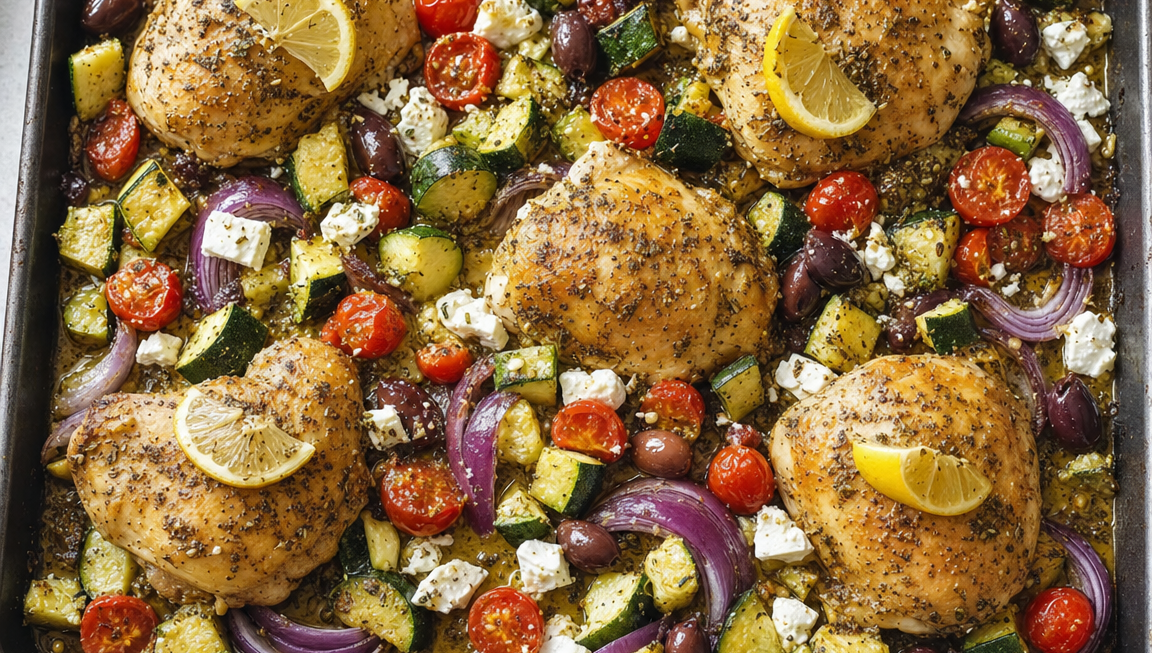
If this is your kind of dinner, try Greek sheet pan chicken next, or crock pot chicken pot pie when you want something you can leave to cook itself.